 Home Factors



Buying a car isn’t what it used to be. Today’s shoppers are researching more brands, comparing new and used vehicles, using AI tools and moving between online research and dealership visits before making a decision.
According to Cox Automotive’s 2025 Car Buyer Journey Study, 75% of vehicle buyers used third-party automotive websites during their search, while 71% began the process without knowing exactly which vehicle they would purchase.
And AI is becoming part of that journey. Cox Automotive found that 25% of new-vehicle buyers used AI tools while shopping.
What does this mean for automotive marketers?
We’ve rounded up 25 recent car buying statistics covering consumer research habits, social media, AI, online shopping and the dealership experience. These findings reveal how consumers are making vehicle decisions and where marketers have opportunities to reach them throughout the buying journey.
How car shoppers research
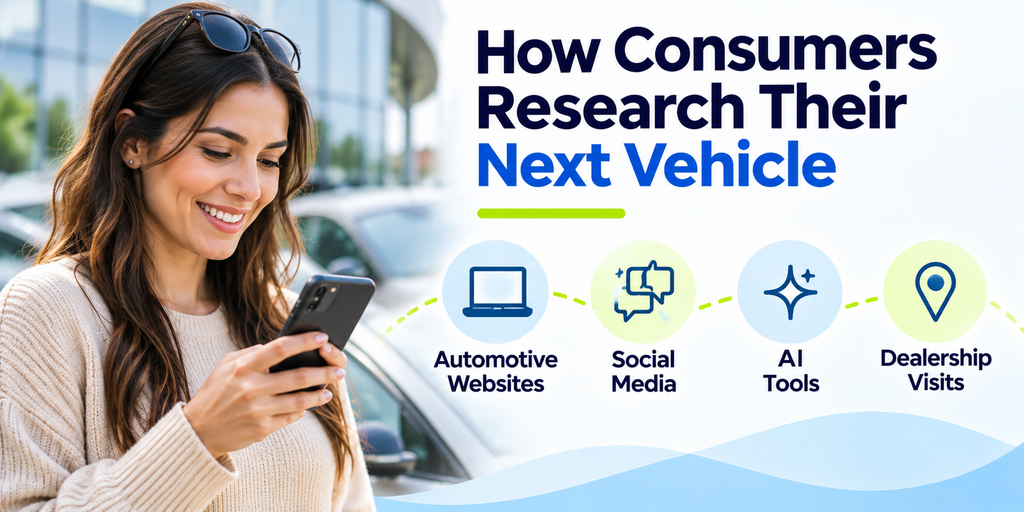
- Third-party sites remain the top destination: 75% of buyers used sites like Kelley Blue Book, Autotrader, Edmunds and Cars.com, and buyers visited an average of 4.6 websites during their search. Source: Cox Automotive, 2025 Car Buyer Journey Study (January 2026)
- 71% of vehicle buyers started the process with an open mind, unsure of what they would buy. Only 29% were certain of a vehicle, down from 37% in 2020. Source: Cox Automotive, 2025 Car Buyer Journey Study (January 2026)
- 66% of buyers considered both new and used vehicles, up from 57% the year before. Source: Cox Automotive, 2025 Car Buyer Journey Study (January 2026)
- 29% of new-vehicle buyers weighed leasing against buying, an all-time high. Source: Cox Automotive, 2025 Car Buyer Journey Study (January 2026)
- 53% of shoppers now consider three or more brands at the start of the process, up from 43% in 2024. Of those who replaced a vehicle, 70% switched to a different brand. Source: CarGurus, 2025 U.S. Consumer Insights Report (December 2025)
- 61% of shoppers visited two or more dealerships in 2025, up from 54% in 2024. Source: CarGurus, 2025 U.S. Consumer Insights Report (December 2025)
- 54% of car shoppers use their phones more than desktops, and another 31% use both equally. Source: CarGurus, 2025 U.S. Consumer Insights Report (December 2025)
Social media and creators
- Over 60% of car buyers use social media during their shopping journey, rising to 74% among Gen Z. Source: Snapchat, Havas Media Network and Alter Agents, Road to Purchase study (December 2025)
- 69% of younger shoppers say creators make them more aware of vehicle brands, and 61% trust creator recommendations and reviews. Source: Snapchat, Havas Media Network and Alter Agents, Road to Purchase study (December 2025)
AI enters the car buying journey
- In Cox Automotive’s first year tracking AI use, 19% of all buyers and 25% of new-vehicle buyers used AI tools such as ChatGPT or Google AI Overviews while shopping. Source: Cox Automotive, 2025 Car Buyer Journey Study (January 2026)
- 63% of in-market shoppers say they will definitely or probably use AI on their next vehicle purchase, and AI tools (36%) are now nearly level with automotive websites (38%) as a research channel. Source: Cox Automotive, AI in Auto Retail Tracker, Q2 2026
- 80% of car buyers and sellers are open to using AI, and 26% already use it. Top uses: comparing vehicles (44%), finding listings (40%), and summarizing reviews of cars (39%) and dealerships (36%). Source: CarGurus, 2025 U.S. Consumer Insights Report (December 2025)
Online and in-person: the omnichannel buyer
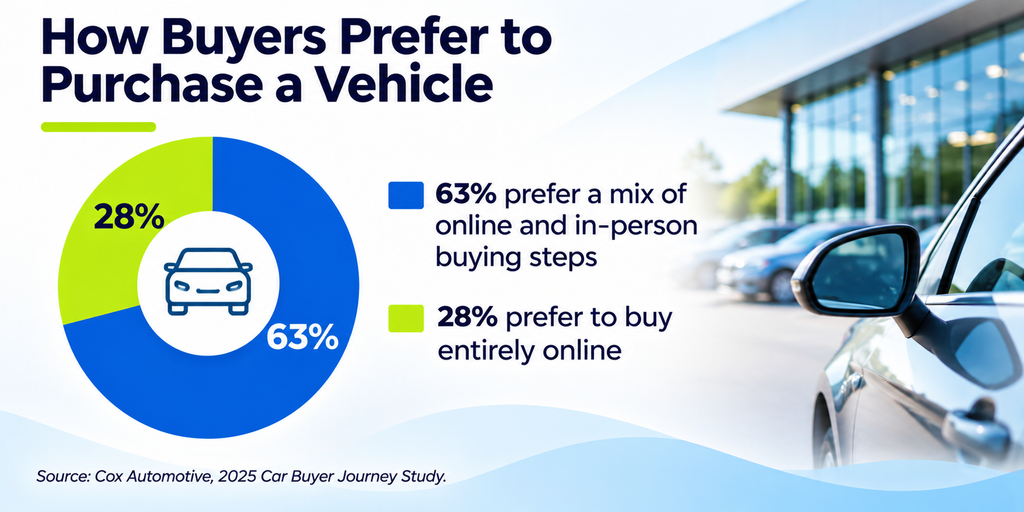
- 63% of buyers say the ideal experience combines online and in-person steps, while only 28% want to buy entirely online. In practice, 53% completed every step at the dealership and just 7% bought fully online. Source: Cox Automotive, 2025 Car Buyer Journey Study (January 2026)
- 83% of consumers prefer to do more of the car buying process from home, up from 72% in 2022. Even so, 86% still want to see the vehicle in person before buying. Source: CarGurus, 2025 U.S. Consumer Insights Report (December 2025)
- Buyers want to do more online than dealers allow: 48% want to apply for credit online but only 33% do, and 37% want to finalize price online but only 19% do. Source: Cox Automotive, 2025 Car Buyer Journey Study (January 2026)
- Half of Gen Z car buyers purchased their last vehicle online, compared with 42% of Millennials and 28% of Gen X. Source: Snapchat, Havas Media Network and Alter Agents, Road to Purchase study (December 2025)
The buying experience
- 71% of buyers were highly satisfied with the car buying process, and new-vehicle buyer satisfaction hit a record 76%. Source: Cox Automotive, 2025 Car Buyer Journey Study (January 2026)
- A record 44% of new-vehicle buyers said their most recent purchase experience was better than their previous one, and only 6% said it was worse. Source: Cox Automotive, 2025 Car Buyer Journey Study (January 2026)
- Mostly digital buyers reported higher satisfaction (78%) than those who used digital tools lightly (65%), and saved an average of 41 minutes at the dealership. Source: Dealertrack (Cox Automotive), 2025 Car Buyer Journey insights
- 84% of mostly digital buyers who used AI assistants were highly satisfied with the overall buying process, among the most satisfied buyers in the study. Source: Cox Automotive, 2025 Car Buyer Journey Study (January 2026)
- 62% of buyers say owning or leasing a vehicle is too costly, and 24% bought sooner than planned because of tariffs. Source: Cox Automotive, 2025 Car Buyer Journey Study (January 2026)
- 73% of car shoppers said economic factors influenced their buying or selling decisions in 2025, leading 31% to buy used instead of new, 24% to keep their cars longer, and 23% to delay their purchase. Source: CarGurus, 2025 U.S. Consumer Insights Report (December 2025)
- Among buyers who traded in a vehicle, 28% said the value was less than expected. When the dealer explained the trade-in value, satisfaction with the deal averaged 800 (on a 1,000-point scale) versus 672 without an explanation. Source: J.D. Power, 2025 U.S. Sales Satisfaction Index Study (November 2025), via CarPro
- 22% of new-vehicle buyers want a follow-up explanation of their vehicle’s features a few weeks after delivery, but 53% of them never receive one. Source: J.D. Power, 2025 U.S. Sales Satisfaction Index Study (November 2025), via CarPro
- 69% of car buyers say their car reflects their identity, up from 49% in 2022. Source: CarGurus, 2025 U.S. Consumer Insights Report (December 2025)

What Do These Car Buying Statistics Mean for Automotive Marketers in 2027?
The latest automotive shopping research reveals a buying journey that’s becoming more digital, more competitive and less predictable. Consumers are considering more brands, exploring different vehicle types and increasingly using AI to help narrow their choices.
Here are five takeaways for automotive marketers.
1. Reach Car Shoppers Before They’ve Chosen a Brand
With 71% of vehicle buyers starting their search without a specific vehicle in mind, marketers have an opportunity to influence consumers earlier in the buying journey.
Rather than focusing exclusively on shoppers searching for a particular make or model, automotive brands and dealerships can use audience and intent data to reach consumers who may be considering their next vehicle purchase.
2. Think Beyond Traditional Automotive Websites
Third-party automotive websites remain important, but consumers are also using social media, mobile devices and AI-powered tools to research vehicles.
Automotive marketers should consider how these channels work together and build campaigns that reach shoppers across multiple touchpoints.
3. Use Vehicle Ownership and Intent Data Together
Understanding what someone currently drives can provide valuable context for automotive marketing. But ownership data alone doesn’t necessarily indicate when someone is ready for another vehicle.
Combining vehicle characteristics, ownership insights and observed shopping intent can help marketers develop more relevant audience segments and messaging.
4. Connect Digital Marketing With the Dealership Experience
Most car buyers still want some combination of online and in-person shopping. That means automotive campaigns should support the entire journey, from initial research and comparison to dealership visits and purchase decisions.
Consistent messaging and relevant offers can help create a smoother transition between digital and physical interactions.
5. Personalize Marketing Around Consumer Needs
Affordability concerns, financing options, vehicle preferences and changing lifestyles all influence automotive purchase decisions.
Marketers can use demographic, household and automotive insights to develop campaigns that better reflect consumers’ interests and circumstances.
The takeaway? Automotive marketing isn’t just about finding people who need a vehicle. It’s about understanding what they’re looking for, when they may be ready to buy and how to reach them with relevant messaging.
Frequently Asked Questions About Car Buying Trends
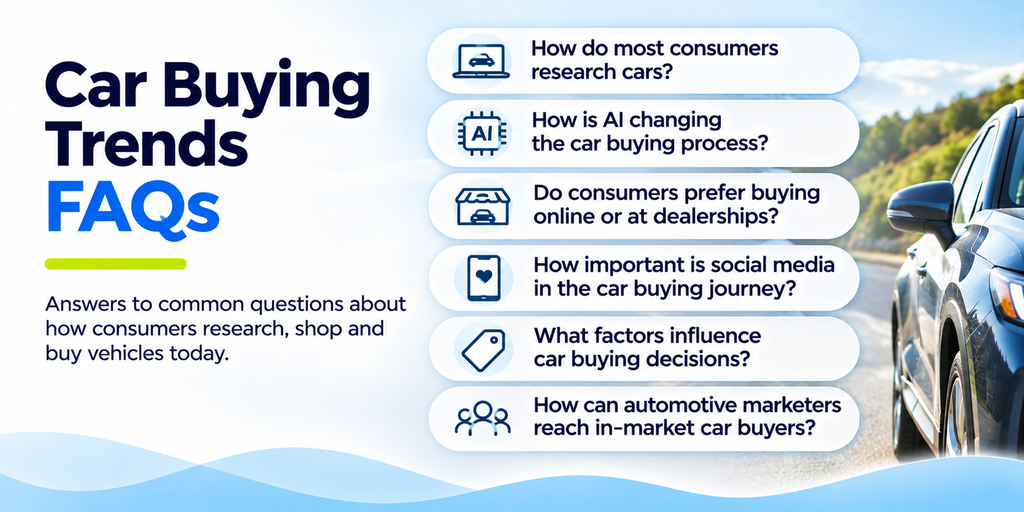
How do most consumers research cars before buying?
Car buyers typically research vehicles across multiple sources, including third-party automotive websites, dealership websites, social media and increasingly AI-powered tools. According to Cox Automotive’s 2025 Car Buyer Journey Study, 75% of buyers used third-party automotive websites, visiting an average of 4.6 websites during their search.
How is AI changing the car buying process?
AI tools are helping consumers compare vehicles, research features, find listings and summarize reviews. Cox Automotive found that 19% of all vehicle buyers and 25% of new-vehicle buyers used AI tools during their shopping journey in 2025.
Do consumers prefer buying cars online or at dealerships?
Most consumers prefer a combination of digital and in-person experiences. According to Cox Automotive, 63% of buyers said their ideal vehicle purchase combines online and dealership steps, while 28% preferred an entirely online experience.
How important is social media in the car buying journey?
Social media plays an increasingly important role in automotive discovery and research, particularly among younger shoppers. Research from Snapchat, Havas Media Network and Alter Agents found that more than 60% of car buyers used social media during their shopping journey, including 74% of Gen Z buyers.
What factors influence car buying decisions?
Vehicle price, affordability, financing options, brand preferences, vehicle features and economic conditions can influence purchase decisions. Consumers also consider whether to buy new or used, lease or finance, and purchase online or at a dealership.
How can automotive marketers reach in-market car buyers?
Automotive marketers can use vehicle ownership information, demographic insights and consumer intent signals to identify more relevant audiences. Combining automotive data with observed research and browsing activity can help brands and dealerships reach consumers who may be considering a vehicle purchase.
Reach Automotive Shoppers With Better Audience Data
As the automotive buying journey becomes more complex, understanding consumers beyond their most recent search can help marketers improve targeting.
PGM’s Auto Factors provides automotive insights, including vehicle make, model, year, mileage, fuel type and other vehicle characteristics.
Combined with PGM’s People Factors and consumer intent data, these insights can help automotive marketers build audiences based on vehicle ownership, consumer characteristics and observed shopping interests.
Whether you’re looking to reach prospective vehicle buyers, promote automotive services or build more relevant marketing campaigns, better audience intelligence can help you connect with the right consumers.