 Home Factors


Every successful marketing campaign starts with understanding your audience.
But knowing your audience today requires much more than basic demographic information like age, gender, or location. Modern marketers need a deeper understanding of the people they’re trying to reach, including their interests, behaviors, purchasing patterns, life stages, and even characteristics about the homes they live in or the vehicles they own.
That’s where audience data comes in.
Audience data helps marketers build a more complete picture of current and prospective customers, making it possible to create more relevant campaigns, improve personalization, and reach the right people with the right message.
In this guide, we’ll explain what audience data is, where it comes from, how it’s used, and why marketers widely recognize it as the most valuable asset in modern marketing.
What Is Audience Data?
Audience data is information about consumers that helps businesses better understand who they are, what they care about, and how to communicate with them more effectively.
Rather than viewing customers as simple names in a database, audience data creates a richer profile by combining multiple characteristics and signals that provide additional context.
Audience data may include information such as:
- Demographics
- Household characteristics
- Homeownership status
- Property insights
- Vehicle ownership
- Lifestyle interests
- Geographic information
- Life stage indicators
- Purchase behaviors
- Shopping intent
- Digital engagement
Together, these attributes help marketers build more meaningful audience segments and deliver more relevant experiences.
Why Audience Data Matters
Consumers expect personalized experiences.
Whether they’re opening an email, browsing social media, watching connected TV, or receiving a direct mail offer, they expect brands to understand their needs and deliver relevant content.
Audience data makes that possible.
When marketers have a better understanding of who they’re trying to reach, they can:
- Build more accurate audience segments
- Personalize marketing messages
- Improve customer acquisition
- Reduce wasted advertising spend
- Increase campaign performance
- Deliver more consistent omnichannel experiences
- Identify new growth opportunities
Instead of sending the same message to everyone, marketers can create campaigns tailored to specific audiences based on shared characteristics, behaviors, or interests.
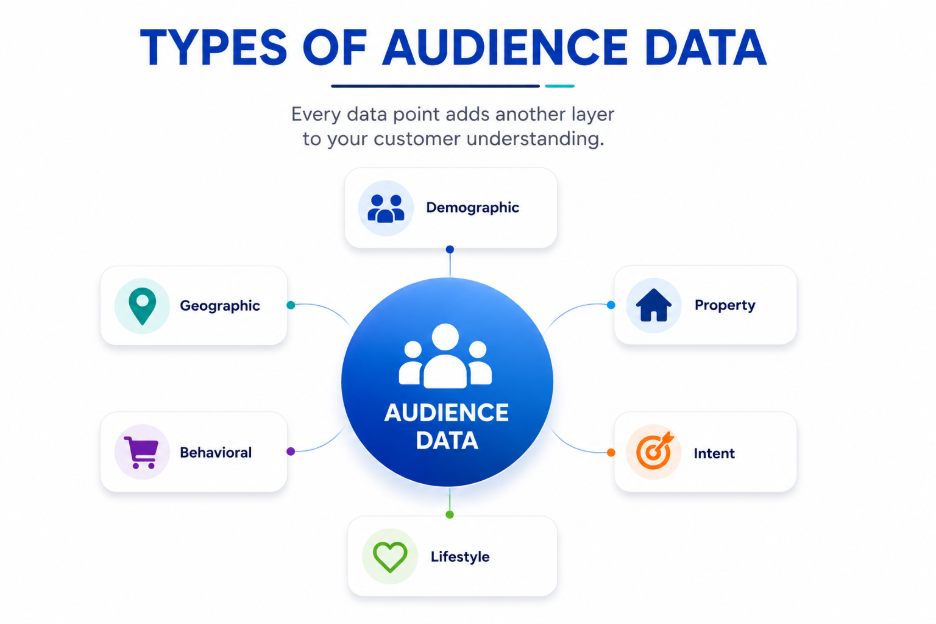
Types of Audience Data
Audience data comes in many forms, with each type adding another layer of insight.
Demographic Data
Demographic data describes who a consumer is.
Examples include:
- Age range
- Household income
- Education
- Occupation
- Marital status
- Household size
These attributes are often used as the foundation for audience segmentation.
Geographic Data
Geographic information identifies where consumers live, work, or shop.
Examples include:
- ZIP code
- City
- State
- Neighborhood
- Trade area
- Urban or rural location
Location data is especially valuable for retailers, financial institutions, insurance carriers, and businesses serving specific markets.
Behavioral Data
Behavioral data reflects what consumers do rather than simply who they are.
Examples include:
- Shopping behaviors
- Website engagement
- Purchase patterns
- Brand preferences
- Product interests
- Digital activity
Behavioral insights often help marketers predict future actions more effectively than demographics alone.
Property Data
For many industries, understanding the home is just as important as understanding the homeowner.
Property data may include:
- Homeownership status
- Home age
- Property value ranges
- Square footage
- Exterior characteristics
- Property type
- Move history
These insights can be particularly valuable for insurance, retail, financial services, and home services marketers. Learn more about Home Factors.
Lifestyle Data
Lifestyle attributes help marketers better understand how consumers live.
Examples include:
- Outdoor enthusiasts
- Pet owners
- Families with children
- Luxury shoppers
- DIY homeowners
- Frequent travelers
Lifestyle information allows marketers to create campaigns that feel more relevant and personalized.
Intent Data
Intent data identifies consumers who are actively researching or considering a purchase.
Examples include:
- Comparing insurance quotes
- Shopping for a vehicle
- Researching home improvement projects
- Looking for a mortgage
- Browsing furniture retailers
Intent data complements audience data by helping marketers understand not only who consumers are, but also what they may be planning to do next. Pairing audience insights with in-market audiences can make campaigns even more effective.
Where Does Audience Data Come From?
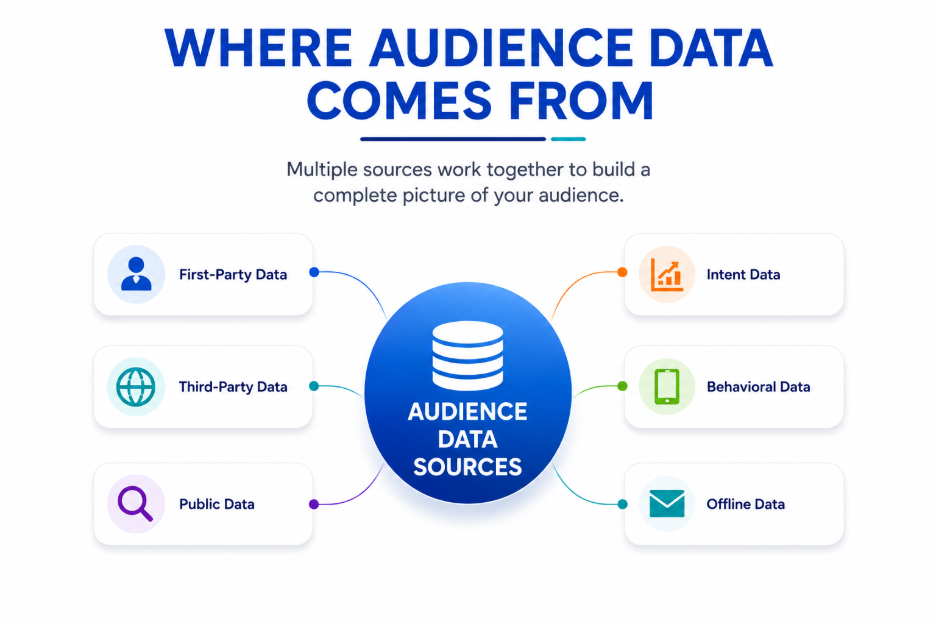
One of the biggest misconceptions is that audience data comes from a single source.
In reality, high-quality audience data is typically built from multiple trusted sources.
These may include:
First-Party Data
Information collected directly by a business through customer interactions, website activity, CRM systems, loyalty programs, and purchases. Learn more about first-party data.
Second-Party Data
Data shared through direct partnerships between trusted organizations.
Third-Party Data
Consumer information aggregated from multiple commercial data providers and standardized for marketing use. For more information, read The Data-Driven Advantage of First- and Third-Party Data.
Public Records
Publicly available information, such as property records, assessor data, and other government sources, can add valuable context for certain use cases.
Behavioral Signals
Behavioral insights may be derived from consumer interactions that indicate interests, preferences, or purchase activity.
By combining multiple sources, marketers gain a more complete and reliable understanding of their audiences.
How Businesses Use Audience Data
Audience data supports a wide range of marketing and business strategies.
Customer Acquisition
Rather than advertising broadly, businesses can identify consumers who are more likely to become customers based on shared characteristics or behaviors.
Audience Segmentation
Audience data allows marketers to create highly targeted segments instead of relying on broad demographic groups.
For example, a retailer might build an audience of recent movers within specific store trade areas, while an insurance carrier may focus on homeowners with particular property characteristics.
Personalization
More complete audience profiles help marketers deliver messages that better reflect each consumer’s interests, needs, or stage of life.
CRM Enrichment
Organizations often use audience data to supplement existing customer records with additional verified attributes, creating a more complete view of each customer.
Omnichannel Marketing
Audience data helps maintain consistent targeting across email, social media, display advertising, connected TV, direct mail, and other marketing channels.
Audience Data vs. Customer Data
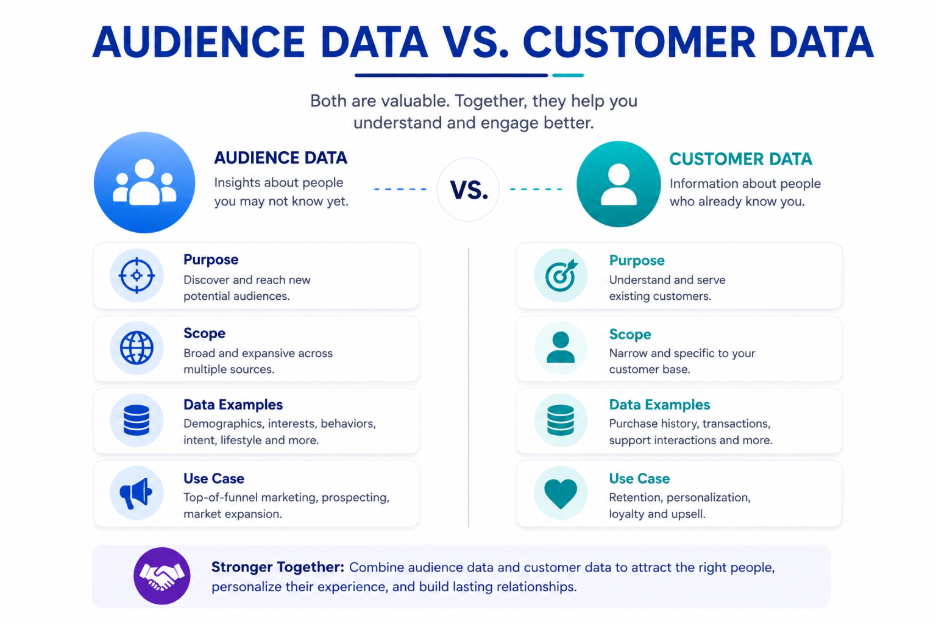
Although they’re closely related, audience data and customer data are not the same.
Customer data comes directly from interactions with your business, such as purchases, website visits, support requests, or loyalty programs.
Audience data expands on that information by providing additional insights that help marketers better understand consumers beyond their direct relationship with the brand.
Together, they create a stronger foundation for segmentation, personalization, and customer acquisition.
Common Myths About Audience Data
Myth: Audience data is only used for advertising.
Reality: Audience data supports CRM enrichment, customer analytics, sales, personalization, direct mail, and strategic planning—not just digital advertising.
Myth: Bigger databases are always better.
Reality: Accuracy, freshness, and completeness are often more important than the total number of records.
Myth: Audience data replaces first-party data.
Reality: Audience data works best alongside first-party data, enriching and expanding the insights businesses already have.
Choosing the Right Audience Data Partner
Not all audience data is created equal.
When evaluating providers, consider factors such as:
- Data quality
- Source transparency
- Refresh frequency
- Identity resolution
- Audience coverage
- Available attributes
- Activation capabilities
- Privacy and compliance
Choosing the right partner can have a meaningful impact on campaign performance, customer acquisition, and long-term marketing success.
For a deeper look at what to evaluate, read our guide on choosing an audience data provider. (blog 2)
Frequently Asked Questions
Is audience data the same as third-party data?
No. Audience data may include first-party, second-party, and third-party data, along with other trusted sources.
What industries use audience data?
Audience data is widely used across retail, insurance, financial services, automotive, travel, telecommunications, healthcare, and home services, among many others.
Can audience data improve personalization?
Yes. By providing a more complete understanding of consumers, audience data helps marketers create more relevant and personalized customer experiences.
Is audience data only for large companies?
No. Businesses of all sizes can use audience data to improve targeting, segmentation, and customer acquisition.
Better Marketing Starts with Better Audience Data
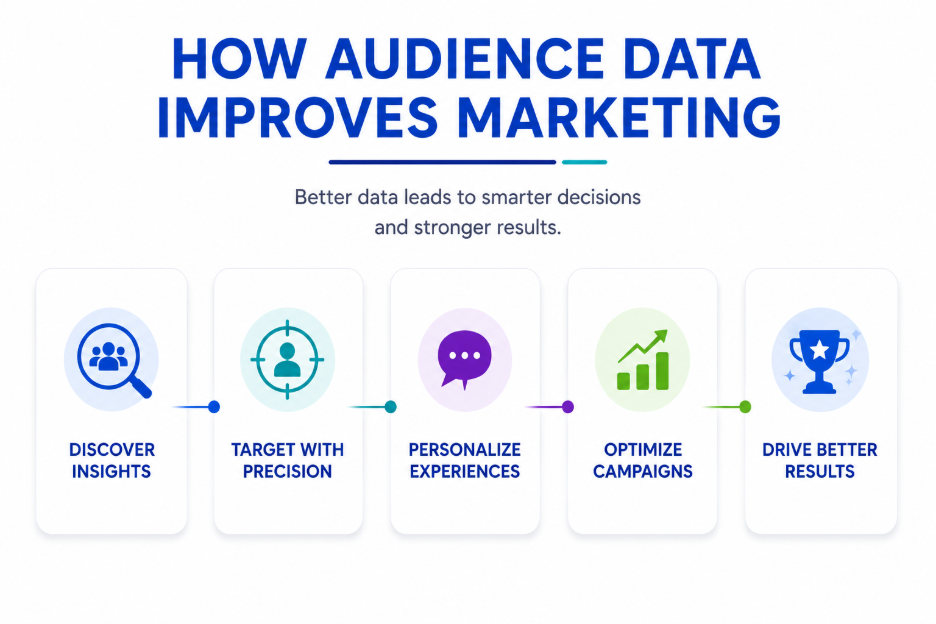
The better you understand your audience, the better your marketing decisions become.
Audience data gives organizations the insights needed to identify the right prospects, personalize customer experiences, improve segmentation, and maximize marketing performance.
As consumer expectations continue to evolve, investing in high-quality audience data is no longer just a competitive advantage. It’s a foundational part of building smarter, more effective marketing strategies.
Continue Building Better Audiences
Audience enrichment is one piece of a broader audience strategy.
To learn how organizations evaluate data quality, compare providers, and build smarter audience strategies, explore our related resources: