 Home Factors



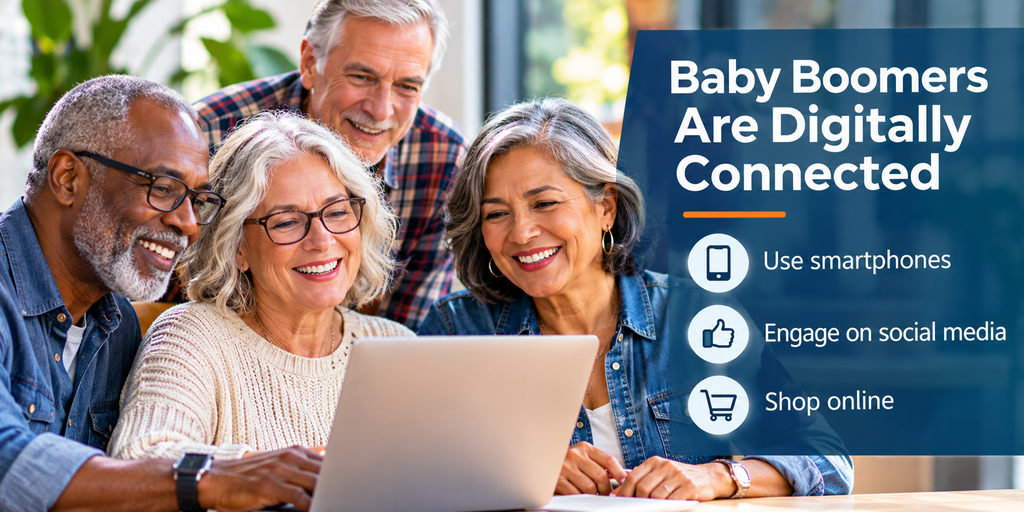
Baby Boomers are more digitally connected than many marketers realize.
Born between 1946 and 1964, Baby Boomers are now in their 60s, 70s, and early 80s. They use smartphones, research products online, engage with brands on social media, and shop across digital and traditional channels.
For marketers, this generation represents an important consumer audience with diverse interests, purchasing needs, and shopping preferences.
But reaching Baby Boomers effectively requires more than targeting consumers based on age alone.
The most successful strategies combine relevant messaging, quality consumer data, accessible digital experiences, and the right mix of marketing channels.
Here are four strategies for marketing to Baby Boomers in 2027.
Understanding Baby Boomer Shopping and Digital Behavior
Baby Boomers grew up before the internet, but that doesn’t mean they aren’t comfortable with digital technology.
Many use online channels to compare products, read customer reviews, research services, and make purchases. At the same time, traditional channels such as direct mail remain valuable ways to reach this audience.
The important distinction is that Baby Boomers aren’t one uniform group.
A consumer in their early 60s may have very different priorities from someone in their early 80s. Income, homeownership, lifestyle, interests, and household needs can be more useful for marketing segmentation than generation alone.
Baby Boomer Social Media Usage
Recent research from Pew Research Center reinforces the importance of digital channels among older Americans.
In 2026, Pew reported:
- 85% of adults ages 50–64 use YouTube, compared with 65% of adults ages 65 and older.
- 71% of adults ages 50–64 use Facebook, compared with 59% of adults ages 65 and older.
- 41% of adults ages 50–64 use Instagram, compared with 21% of adults ages 65 and older.
Source: Pew Research Center, Americans’ Use of Social Media in 2026.
Although these age categories don’t align exactly with Baby Boomer birth years, they demonstrate why marketers shouldn’t overlook older consumers when developing digital campaigns.
1. Use Personalized Email Marketing to Build Stronger Connections
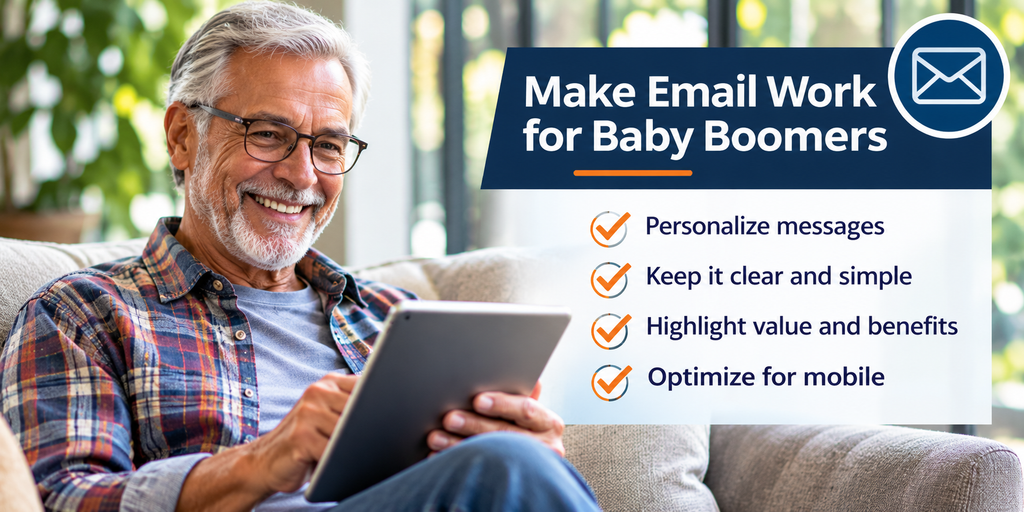
Email remains a valuable channel for communicating with existing customers, sharing promotions, and introducing relevant products and services.
For Baby Boomer audiences, the key is creating messages that are useful, easy to read, and relevant to their needs.
Segment Your Email Audiences
Rather than sending the same message to every consumer over 60, consider segmenting audiences using:
- Household income and estimated purchasing power
- Homeownership and property characteristics
- Lifestyle interests and hobbies
- Geographic location
- Previous purchases and customer engagement
- Consumer purchase intent
For example, a home improvement retailer could develop different email campaigns for homeowners interested in renovations, consumers researching energy-efficient upgrades, and households preparing for a move.
PGM’s People Factors consumer data provides demographic, household, and lifestyle insights that can help marketers build more relevant audience segments.
Make Emails Easy to Read and Act On
Effective email design benefits consumers of every age.
Use descriptive subject lines, readable fonts, strong contrast, and clear calls to action. Avoid cluttered layouts or requiring multiple steps to access an offer.
Emails should also be optimized for mobile devices, with buttons that are easy to tap and landing pages that load quickly.
Focus on Value and Credibility
Explain what makes your product or service useful. Include customer reviews, relevant examples, and straightforward product information.
For higher-consideration purchases, educational content may be more helpful than aggressive promotional messaging.
Keep Your Customer Data Current
Outdated email addresses and incomplete customer records can limit campaign reach.
Regular data hygiene and email append services can help marketers maintain more complete customer contact information.
Marketing takeaway: Personalize email campaigns around consumer needs and interests, not assumptions about age.

2. Reach Baby Boomers Through Social Media and Video
Social media isn’t just for younger generations.
Facebook and YouTube are particularly important platforms to consider when developing campaigns for older consumers, although platform preferences vary by audience.
For marketers, these channels offer opportunities to build awareness, demonstrate products, share educational content, and engage with potential customers.
Create Helpful, Educational Content
Consider the questions consumers ask before making a purchase.
A financial services company might explain product features and account options. A home improvement brand could publish tutorials about home maintenance or renovation planning.
Educational videos, product demonstrations, and customer testimonials can help answer questions and build confidence.
Use Video to Demonstrate Value
Video can be especially useful for products that benefit from a demonstration.
For example, retailers can show how a product works, explain installation requirements, or compare available options.
Keep videos focused, use readable captions, and make the next step clear.
Build Trust Through Authentic Messaging
Use relatable examples and real customer experiences where possible.
Avoid exaggerated claims, overly complicated language, or messaging that assumes older consumers are unfamiliar with technology.
Test Your Channel Mix
Facebook and YouTube are useful starting points, but they shouldn’t automatically receive every advertising dollar.
Evaluate campaign performance by audience segment, product category, and business objective.
Marketing takeaway: Meet Baby Boomers on the digital platforms they use, with content that helps them make informed purchasing decisions.
3. Improve Search Visibility and the Online Shopping Experience
Search engines play an important role in how consumers discover businesses and research products.
For brands targeting Baby Boomers, search visibility should be paired with a website experience that makes information easy to find and purchases straightforward.
Answer the Questions Consumers Are Searching For
Develop useful content around product comparisons, pricing, benefits, service options, and common customer questions.
For example, a home services company might create articles addressing:
- How to compare replacement windows
- What to consider before replacing a roof
- Questions to ask when choosing a contractor
- How to evaluate home improvement costs
Content should provide direct answers while giving readers enough detail to make informed decisions.
Optimize for Local Search
Many purchases involve local businesses or service providers.
Make sure your business listings include accurate contact information, locations, operating hours, and customer reviews.
For businesses serving specific geographic markets, location-focused content can also help consumers find relevant services.
Make Your Website Accessible
A well-designed website should be easy for everyone to navigate.
Prioritize:
- Readable text and strong color contrast
- Clear navigation and descriptive buttons
- Mobile-friendly pages
- Simple forms and checkout processes
- Accessible product descriptions and customer support options
These improvements can benefit all shoppers while reducing unnecessary barriers for older consumers.
Consider AI-Assisted Search
As consumers increasingly encounter AI-generated answers and recommendations, brands should make their website content clear, accurate, and easy to understand.
Use descriptive headings, answer common questions directly, and keep product and business information current.
Marketing takeaway: Strong search visibility attracts potential customers, while a straightforward website experience helps turn interest into action.

4. Include Direct Mail in Your Baby Boomer Marketing Strategy
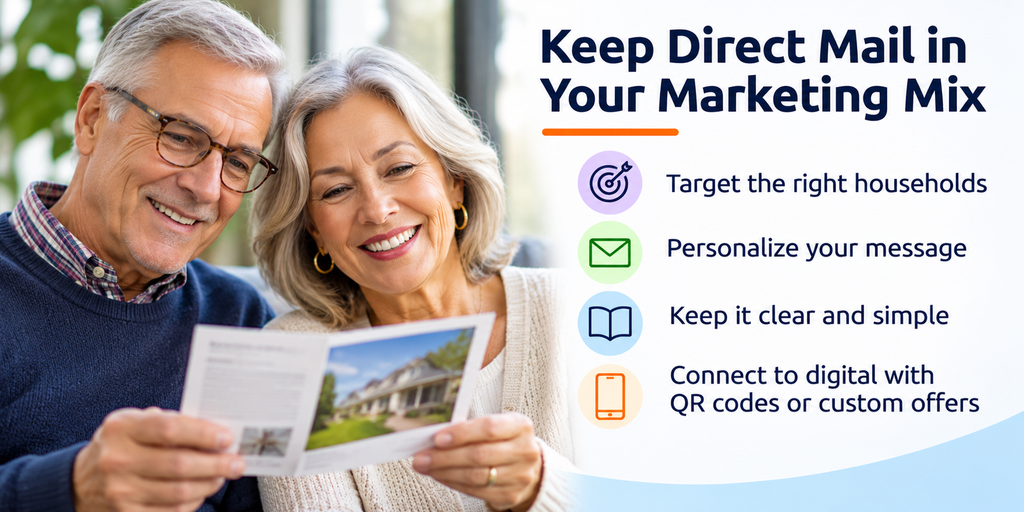
Digital marketing is important, but direct mail can still play a valuable role in reaching Baby Boomer audiences.
Physical mail gives consumers something tangible to review and can complement email, digital advertising, and other marketing channels.
For industries such as home services, insurance, retail, and financial services, targeted direct mail can support both customer acquisition and retention.
Personalize Your Direct Mail Campaigns
Use available consumer and household data to develop more relevant mailing lists.
For example, a home improvement business could target homeowners in selected geographic areas based on property characteristics and likely service needs.
A retailer might develop campaigns for households with specific lifestyle interests or purchasing characteristics.
Keep the Message Clear
Use a strong headline, concise copy, readable typography, and a prominent call to action.
Make it easy for recipients to understand the offer and what to do next.
Connect Direct Mail With Digital Channels
Direct mail doesn’t need to operate independently.
A retailer might send a targeted postcard featuring a promotional offer while reinforcing the campaign through digital advertising or email.
QR codes, personalized landing pages, and promotional codes can help connect physical mail to digital experiences and support campaign measurement.
Test Different Offers and Audiences
Experiment with different creative approaches, audience segments, and offers.
Measure response rates, conversions, acquisition costs, and revenue to determine which campaigns are most effective.
Learn more about PGM’s Direct Mail Marketing Solutions.
Marketing takeaway: Direct mail can complement digital campaigns and provide another way to reach consumers with relevant, personalized offers.
How Can Consumer Data Improve Baby Boomer Marketing?
One of the biggest mistakes marketers can make is assuming that everyone in the Baby Boomer generation has the same interests or purchasing needs.
Age can be a useful starting point, but better audience targeting considers additional consumer characteristics.
For example:
- Demographic and Household Data
Understand household composition, income estimates, homeownership, and other characteristics that may influence purchasing decisions. - Lifestyle and Interest Data
Identify consumers based on interests, hobbies, and lifestyle characteristics relevant to your products or services. - Consumer Intent Data
Reach consumers who are actively researching relevant product and service categories. - Mover Data
Identify consumers preparing to move or recently settling into a new home, when household purchasing needs may change. - Contact Data
Support coordinated outreach using available email and postal address information.
PGM helps B2C marketers build targeted audiences through several consumer data solutions:
- People Factors provides demographic, household, and lifestyle attributes for audience targeting and enrichment.
- Mover Factors helps marketers reach consumers at different stages of the moving journey.
- Consumer Intent Data helps identify consumers researching products and services across a range of categories.
These insights can help marketers move beyond broad generational targeting and develop campaigns based on more meaningful audience characteristics.
The Bottom Line: Don’t Overlook Baby Boomers
Baby Boomers remain an important audience for brands across retail, home services, insurance, financial services, and other consumer industries.
They’re researching products online, engaging with brands through digital channels, and responding to marketing that reflects their needs.
For marketers, the opportunity isn’t simply to reach more older consumers. It’s to understand the differences within this generation and develop more relevant campaigns.
By combining email, social media, search, and direct mail with quality consumer data, brands can build stronger connections and improve marketing performance.
Reach Baby Boomer Audiences With PGM
Looking to reach Baby Boomers with more targeted marketing campaigns?
PGM provides consumer and household insights to help you identify valuable audiences, enrich your customer data, and reach consumers across marketing channels.