 Home Factors


For decades, homeownership was viewed as one milestone among many. People got married, started families, changed careers, adopted pets, moved cities, and somewhere along the way, eventually bought a house.
That timeline has changed.
Today, homeownership is increasingly becoming the milestone that determines when many other life decisions happen. And for marketers, that shift says a lot about changing consumer priorities, financial behavior, and long-term planning.
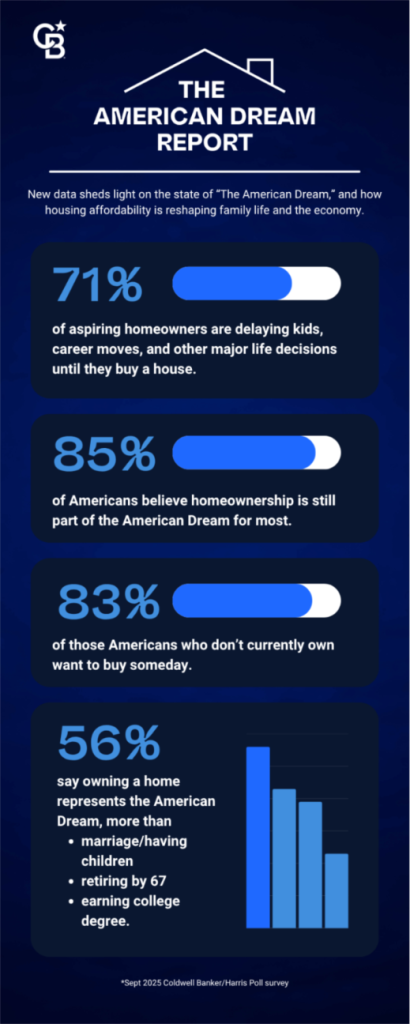
According to a recent Harris Poll conducted for Coldwell Banker, 71% of aspiring homeowners say they are delaying major life milestones until they can afford a home. That includes decisions around marriage, children, career moves, starting a business, and even pet ownership.
The findings reveal something much larger than housing affordability. They point to a major shift in consumer behavior.
Homeownership is no longer just part of adulthood. For many consumers, it has become the foundation for adulthood itself.
That has major implications for brands trying to understand today’s buyers.
Homeownership Is Changing How Consumers Prioritize Life Decisions
The research highlights how deeply homeownership now influences personal decision-making.
According to the report:
- 18% are delaying marriage or having children
- 17% are postponing career changes or pet ownership
- 15% are waiting to start a business
These are not small lifestyle adjustments. These are foundational life choices being reorganized around the ability to buy a home.
For marketers, this matters because consumer priorities directly shape spending behavior.
A consumer focused on saving for a down payment may:
- Delay discretionary purchases
- Spend differently across categories
- Prioritize financial security over convenience
- Research large purchases more carefully
- Engage differently with brands
The emotional weight tied to homeownership has also increased. Consumers are not simply shopping for property. They are chasing stability, independence, and long-term security in an economy that often feels unpredictable.
That changes the messaging that resonates.
Traditional “dream home” marketing may not connect the same way it once did. Consumers increasingly respond to messaging around:
- Financial confidence
- Stability
- Flexibility
- Long-term planning
- Building a future
The brands that understand these emotional drivers will be better positioned to build trust with modern buyers.

How Younger Buyers Are Reshaping Homeownership Trends
The shift is especially noticeable among Gen Z consumers.
According to the report, 84% of Gen Z aspiring homeowners are delaying at least one major life milestone until they purchase a home.
That statistic reflects a broader generational shift in how younger consumers define adulthood and financial readiness.
For previous generations, buying a home often followed milestones like marriage or starting a family. Today, many younger buyers see homeownership as the prerequisite for those milestones.
That changes how brands should think about audience behavior and lifecycle marketing.
Gen Z consumers are approaching major purchases differently:
- Spending more time researching
- Comparing options across channels
- Seeking financial education
- Prioritizing flexibility
- Delaying traditional timelines
This also creates a longer and more emotional customer journey.
A future homebuyer may spend years researching neighborhoods, financial tools, mortgage options, home inspiration, insurance products, and renovation ideas before ever purchasing a home.
For marketers, that means the opportunity to influence future buyers begins much earlier than many brands realize.
Today’s Homebuyers Are Purchasing Later in Life
The timeline for homeownership is also shifting upward.
More than 53% of first-time homebuyers now expect to purchase after age 40.
That would have seemed unusual a generation ago, but today it reflects changing economic realities and evolving consumer priorities.
Many consumers are balancing:
- Student debt
- Higher living costs
- Rising home prices
- Career mobility
- Delayed family planning
At the same time, younger generations are redefining what success and stability look like.
Some consumers are prioritizing travel, experiences, remote work flexibility, or financial independence before committing to homeownership.
That means marketers can no longer assume all first-time homebuyers fit the same demographic mold.
Today’s buyers are often:
- Older
- More financially informed
- More digitally connected
- More research-driven
- More intentional about large purchases
This creates an opportunity for brands to deliver more personalized messaging based on actual consumer behavior and life stage signals rather than outdated assumptions about age or household structure.
Homeownership Still Represents the American Dream
Even as timelines shift, the emotional importance of homeownership remains incredibly strong.
According to the Harris Poll:
- 56% say homeownership represents the ultimate expression of the American Dream
- 85% say homeownership remains central to achieving that dream
That emotional connection matters.

A home represents far more than square footage or property value. For many consumers, it represents:
- Security
- Stability
- Independence
- Achievement
- A sense of control over the future
This is why homeownership continues to influence so many purchasing decisions across industries, including:
- Insurance
- Retail
- Financial services
- Automotive
- Home improvement
- Utilities
- Moving services
Consumers preparing for homeownership often enter entirely new spending categories while reevaluating priorities across existing ones.
That creates significant opportunities for brands that understand how household formation impacts consumer behavior.
What This Means for Marketers
For marketers, the biggest takeaway is this:
Homeownership is no longer simply a housing event. It has become a major consumer behavior signal.
It influences:
- Spending habits
- Purchase timing
- Financial priorities
- Brand engagement
- Household formation
- Long-term planning
And because the path to homeownership is becoming longer and more emotionally driven, marketers have more opportunities to engage consumers throughout the journey.
The brands seeing the strongest results today are often those using audience insights to better understand:
- Life stage transitions
- Household changes
- Moving activity
- Homeownership intent
- Financial priorities
- Cross-channel behavior
The customer journey surrounding homeownership no longer begins at closing. In many cases, it starts years earlier.
Understanding those signals can help brands build more relevant messaging, stronger audience strategies, and more meaningful customer experiences.
As consumer priorities continue to evolve, homeownership may remain one of the clearest indicators of how modern buyers think about stability, success, and the future they want to build.
Want to better understand how homeownership trends are shaping consumer behavior? Contact PGM to learn how audience insights and household data can help you reach future homebuyers with more relevant marketing strategies.