 Home Factors


Impulse buying is one of the most misunderstood concepts in modern marketing.
It is often treated as a moment of irrationality—an emotional click, a spontaneous checkout, a purchase made without thought.
But the data tells a different story.
What appears “impulsive” is usually the final expression of a much longer decision process shaped by intent signals, financial constraints, and perceived value.
In other words:
Impulse is not random. It is readiness compressing into action.
The Myth of the Unplanned Purchase
Consumers are not behaving as erratically as marketers often assume.
According to recent consumer spending trend data compiled by Ipsos, titled “What makes a splurge purchase, worth it?”
Households continue to prioritize essentials while pulling back on discretionary categories, even as overall financial sentiment stabilizes.
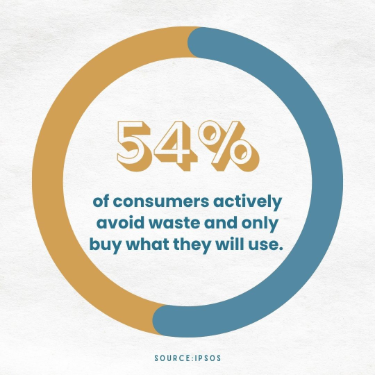
One key finding shows that 54% of consumers actively avoid waste and only buy what they will use.
Even when purchases feel spontaneous, consumers are increasingly operating under internal rules:
- “Will I actually use this?”
- “Does this justify the cost?”
- “Will I regret this later?”
So, what gets labeled as impulse is often just pre-approved spending finally reaching execution.
What Makes a Purchase Feel “Worth It”
The concept of “worth it” is doing more work in consumer decision-making than most marketers account for.
A purchase is not evaluated on price alone. It is evaluated on expected longevity of value vs. emotional or financial regret.

Across spending trend research, a consistent pattern emerges – consumers are concentrating spending into fewer, more justified purchases rather than frequent small ones.
Consumers are still buying emotionally—but only when emotion is supported by rational justification.
That’s the key marketers miss.
Why These Decisions Are More Intentional Than They Appear
The classic marketing model assumes impulse is triggered at the point of exposure.
But modern behavior shows something different: most “impulse” purchases are actually delayed intent releases.
Consumers may look like they are reacting in the moment, but they are often:
- Re-visiting products multiple times before buying
- Comparing alternatives across channels
- Waiting for internal justification thresholds to be met
Ipsos data shows a pattern supporting this shift: consumers are not simply reacting to inflation or promotions—they are restructuring how and when they spend.
So the question is not:
“What triggered the purchase?”
It is:
“What made the purchase finally feel safe enough to execute?”
Why Marketers Misread Impulse Moments
Most marketing systems still assume conversion is driven by the final interaction.
The last touchpoint is rarely the most persuasive. It is simply the most convenient. By the time a consumer converts, prior exposure has already built familiarity and reduced uncertainty.
At the same time, contextual readiness is often overlooked. Life events and shifting needs usually determine when a purchase becomes relevant, not a single ad.
This is where “impulse” gets misdiagnosed.
What looks spontaneous is typically the moment when accumulated exposure and real-world context finally align.

4 Signals That Show Intent Is Building
If impulse is actually compressed intent, then the opportunity shifts from triggering demand to detecting readiness.
There are four categories of signals marketers should prioritize:
1. In-Market & Behavioral Signals
Consumers who are actively shopping for your products and services obviously are the ideal audience to target.
These are the clearest indicators of narrowing intent.
Look for:
- Repeat product page visits
- Comparison behavior across similar products
- Increased time spent in researching or browsing content
- Cart revisits without conversion
This is not just browsing. It’s active indicators of people gathering info to make decisions.
2. Life Stage Signals
Some of the strongest purchase predictors are life changes:
- Moving homes
- First-time homeownership
- New children or family expansion
- Job changes or relocation
New movers, in particular, are one of the most overlooked audiences. Yet nearly 90% say they’re open to trying new brands, and they spend heavily before, during, and after the move.
3. Household Context Signals
How people perceive value depends on their situation:
- Income band
- Home ownership status
- Household composition
Two consumers can see the same offer and respond very differently based on what is important to them..
4. Timing Signals
Timing turns intent into action.
Key indicators include:
- Seasonal cycles (back-to-school, holidays, weather shifts)
- Recent related purchases (category adjacency)
- Event-driven triggers (weddings, moves, renovations)
Timing does not create demand but it does reveal when someone is ready to act.

Conclusion
The obsession with “impulse” has led marketing toward attention grabbing tactics, often at the expense of what actually drives conversion: recognizing intent at the right moment.
That means focusing on:
- Detecting readiness earlier than competitors
- Aligning messaging with real-world context
- Reducing friction at the exact moment intent matures
What gets labeled as impulse is usually just intent reaching a point where action becomes easy.
This is where data makes the difference. With the right signals and data insights, marketers can move beyond guessing and start identifying when intent is forming, how it’s evolving, and when it’s ready to convert.
That’s exactly what PGM enables. By combining consumer, property, and behavioral insights, you can see the full picture and act on it, reaching the right audience at the right moment with confidence.Impulse buying certainly isn’t disappearing. And honestly, I see this in my own behavior all the time. I will call something an “impulse buy,” but the reality is I have already looked at it three times, read the reviews, compared options, and then somehow act surprised when I click buy in under ten seconds.
The shift for marketers is simple:
Stop optimizing the moment of impulse.
Start optimizing for the moment a decision becomes inevitable so you can show up exactly when it counts.