 Home Factors


Updated November 2026
Direct mail continues to be a powerful way for brands to reach consumers, build trust, and drive action. And as digital advertising becomes increasingly crowded, a well-timed, personalized piece of mail can help marketers stand out.
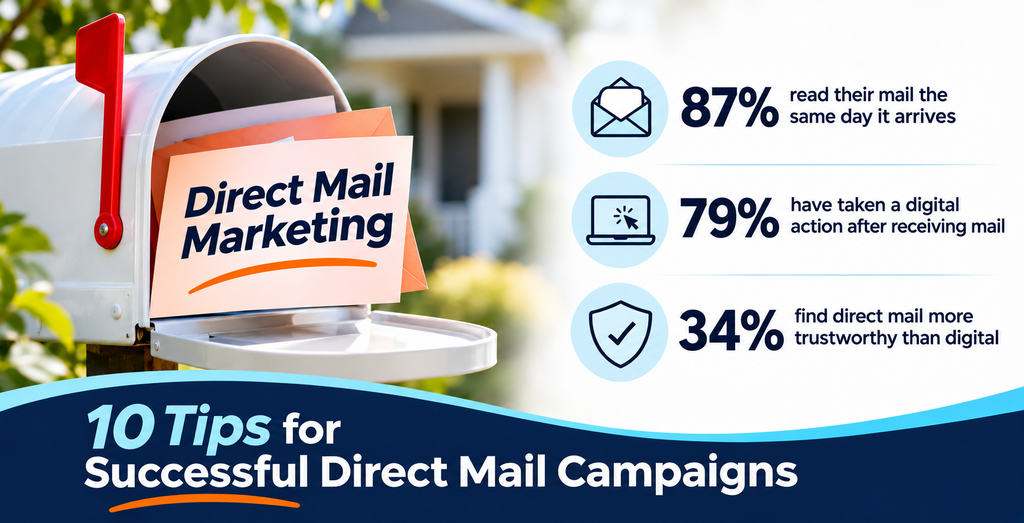
According to Lob’s 2026 State of Direct Mail consumer research, 87% of consumers read their mail the same day it arrives, while 82% collect their mail daily or nearly every day.
Trust is another advantage. The same research found that 34% of consumers consider direct mail more trustworthy than digital communication, up nine percentage points from the previous year. Meanwhile, 62% say AI has made them more skeptical of digital advertising.
For B2C marketers planning their 2027 campaigns, direct mail offers an opportunity to connect with consumers in a more tangible and personal way.
But successful direct mail marketing takes more than an attractive postcard or compelling offer. It starts with reaching the right households, understanding their needs, and delivering a message at the right time.
Key Takeaways
- 87% of consumers read their mail the same day it arrives.
- 79% of consumers have taken a digital action after receiving direct mail.
- 34% of consumers consider direct mail more trustworthy than digital communication.
- 45% of consumers would discard mail that uses pushy language such as “Final Notice” or “Act Now.”
- Accurate consumer data, audience segmentation, personalization, and digital follow-up can help marketers improve campaign relevance and results.
Statistics are from Lob’s 2026 consumer research, as reported by E-commerce News and PPC Land.
What Makes a Direct Mail Campaign Successful?
A successful direct mail campaign combines accurate audience targeting, relevant messaging, compelling creative, a clear call to action, and measurable results.
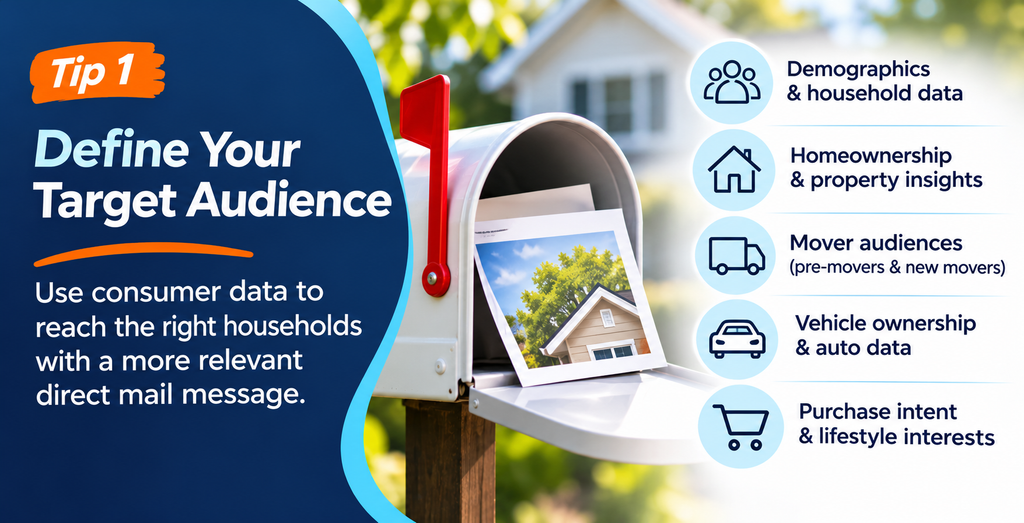
The most effective campaigns begin with understanding who the audience is and why they would be interested in the offer. Marketers can use consumer data to identify households based on demographics, homeownership, interests, purchase intent, and important life events such as moving.
Combining direct mail with email, digital advertising, and other marketing channels can also help reinforce messaging and encourage consumers to take action.
Why Direct Mail Still Works in 2027
Direct mail offers something digital channels cannot: a tangible experience.
Consumers can hold a postcard, browse a catalog, or save an offer for later. Unlike digital advertising, a mail piece doesn’t have to compete with an endless stream of notifications, social posts, and online ads.
Direct mail can also encourage consumers to engage with brands online.
According to Lob’s 2026 research, 79% of consumers have taken a digital action after receiving direct mail, such as visiting a website or searching for a brand.
That makes direct mail a valuable part of an omnichannel marketing strategy.
For marketers, the opportunity is to make every piece of mail more relevant through better audience targeting, personalization, and timing.
10 Direct Mail Marketing Tips for 2027
1. Define Your Target Audience
The success of a direct mail campaign starts with who receives it.
Sending the same message to thousands of households without considering their needs or interests can result in wasted postage and missed opportunities.
Instead, start by identifying your ideal customer.
Consider questions such as:
- What demographic and household characteristics define your best customers?
- Are you targeting homeowners, renters, families, or specific age groups?
- What products or services are they likely to need?
- Are there life events or purchasing behaviors that indicate an opportunity?
- Which geographic markets offer the greatest potential?
Consumer data makes it possible to move beyond broad geographic targeting.
For example, a home improvement company might target homeowners based on property characteristics, while an automotive marketer could use vehicle information to identify relevant audiences.
PGM’s People Factors provides access to more than 250 million consumer profiles and over 700 available attributes to support audience segmentation.
Timing matters, too.
Life events such as moving create new purchasing needs. Households preparing to move or settling into a new home may be shopping for furniture, home services, insurance, appliances, and other products.
PGM’s Mover Factors helps marketers identify consumers throughout the moving journey, including pre-movers and recent movers.
PGM research has also identified a 2.5-month window for high-intent mover marketing, reinforcing the importance of reaching consumers when their needs are changing.
Direct mail tip: Build smaller, more targeted audience segments rather than relying on one broad mailing list.
Ready to Make Your Direct Mail Campaigns More Targeted?
Learn how PGM’s consumer data can help you reach the right households with more relevant, personalized campaigns.
Let’s Talk
2. Craft Compelling Copy
Your direct mail piece has only a few seconds to capture attention.
Whether you’re sending a postcard, letter, or catalog, your message should immediately communicate why the recipient should care.
Start with a headline that highlights a benefit, solves a problem, or introduces a relevant offer.
Then keep your supporting copy concise and focused on the customer.
Three ways to strengthen your direct mail copy:
- Lead with a clear benefit. Tell recipients what they gain from your product or service.
- Make it relevant. Connect the message to their interests, needs, or circumstances.
- Use natural language. Write in a conversational tone rather than relying on exaggerated claims or generic marketing phrases.
For example, a home services company targeting recent movers might use:
“New Home? Get Your HVAC System Ready for the Season.”
That message is more relevant to a new homeowner than a generic promotion sent to every household.
The more closely your message matches the audience, the stronger the reason to respond.
3. Use Eye-Catching Design
Design plays an important role in whether a direct mail piece gets noticed, read, or discarded.
A cluttered layout with too much text can overwhelm recipients, while a clean design helps communicate your message quickly.
Consider these elements:
- High-quality visuals: Use images that reflect your audience and reinforce the offer.
- Clear typography: Make headlines easy to read and important information easy to find.
- Consistent branding: Use recognizable colors, fonts, and visual elements.
- White space: Give the message room to breathe.
- Format: Test oversized postcards, folded mailers, or other formats that stand out.
Your design should also make the next step obvious.
Whether you want recipients to visit a website, scan a QR code, or call your business, the call to action should be easy to locate.
Direct mail tip: Design for quick scanning. A recipient should understand your offer within a few seconds.
4. Personalize Your Message
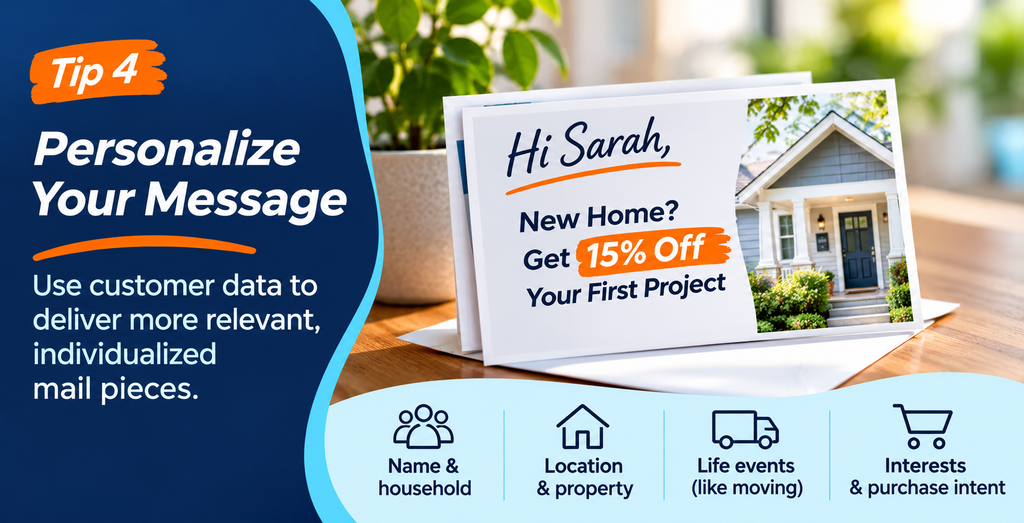
Personalization is one of the most effective ways to make direct mail more relevant.
And it goes well beyond adding someone’s first name.
Marketers can personalize direct mail based on location, household characteristics, purchasing interests, and life events.
For example:
- A retailer might promote products based on household interests.
- An automotive brand might tailor messaging using vehicle ownership information.
- A home services company might target homeowners based on property characteristics.
- A furniture retailer might reach households preparing to move.
- A local business might customize offers based on neighborhood or geographic market.
Variable data printing makes it possible to personalize different elements of a mail piece, including names, offers, images, and messages.
However, effective personalization depends on the quality of the underlying customer data.
If records are incomplete or outdated, marketers may miss opportunities to reach customers with relevant offers.
PGM’s Data Append solutions help marketers enrich existing customer records with additional demographic, household, and contact information.
This additional context can support better audience segmentation and more personalized direct mail campaigns.
Direct mail tip: Personalize around what matters to the recipient, not just what information you have available.
5. Offer Real Value
A compelling offer gives consumers a reason to respond.
But value doesn’t always mean offering the biggest discount.
Depending on your audience, an effective offer might include:
- A discount or promotional code
- Free shipping or delivery
- A complimentary consultation
- Exclusive access to a product or service
- A useful guide or resource
- A limited-time introductory offer
The most important consideration is relevance.
A new homeowner may respond to an offer for a home maintenance service, while a consumer researching a new vehicle may be more interested in a test drive or financing promotion.
Consider testing different offers across audience segments to understand what resonates.
Direct mail tip: Match the offer to the audience’s needs rather than sending the same promotion to everyone.
6. Create Urgency Without Pressure
A deadline can encourage consumers to act, but aggressive language may have the opposite effect.
According to Lob’s 2026 consumer research, 45% of consumers would throw away mail that uses pushy language such as “Final Notice” or “Act Now.”
Instead of creating artificial pressure, give recipients a genuine reason to respond within a certain period.
Examples include:
- Clear deadlines: “Save 25% on your first order through March 31.”
- Seasonal timing: “Get your home ready for summer with a free inspection this month.”
- Exclusive offers: “As a new neighbor, enjoy this special welcome offer.”
- Limited availability: “Only 50 spring appointments remain,” when the limitation is accurate.
Urgency should support the offer rather than overshadow it.
Direct mail tip: Use specific, truthful deadlines and explain why acting now benefits the customer.
7. Use a Strong, Easy Call to Action
Every direct mail campaign needs a clear next step.
What do you want recipients to do after reading your message?
Visit a website? Schedule an appointment? Redeem an offer? Call your business?
Choose one primary action and make it easy to complete.
Direct mail can be particularly effective at driving online engagement.
With 79% of consumers reporting that they have taken a digital action after receiving mail, marketers have an opportunity to connect offline outreach with digital experiences.
Consider these approaches:
- QR codes: Direct recipients to a landing page, product page, or appointment scheduler.
- Personalized URLs: Create unique web addresses that can help personalize experiences and track responses.
- Offer codes: Make promotions easy to redeem online or in stores.
- Phone numbers: Give customers a direct way to contact your business.
- Dedicated landing pages: Reinforce the mailer’s message and make the next step simple.
Make sure the landing page matches the offer and branding of the direct mail piece.
Direct mail tip: Avoid competing calls to action. Give recipients one clear next step.
8. Test and Refine Your Campaigns
Even experienced marketers can’t predict exactly which creative, offer, or audience will perform best.
That’s why testing matters.
Start by testing one variable at a time.
You might compare:
- Two headlines
- Different offers
- Postcards versus letters
- Personalized versus generic messaging
- Different audience segments
- QR codes versus traditional website URLs
Audience testing can be especially valuable.
The same offer may generate different results depending on the household characteristics, interests, or life stage of the recipients.
For example, a home improvement campaign targeting recent movers may perform differently from one targeting long-term homeowners.
Using consumer and property data to create distinct test groups can help marketers identify which audiences offer the greatest potential.
Direct mail tip: Document your results and use them to improve the next campaign.
9. Make Direct Mail Part of Your Omnichannel Marketing Strategy
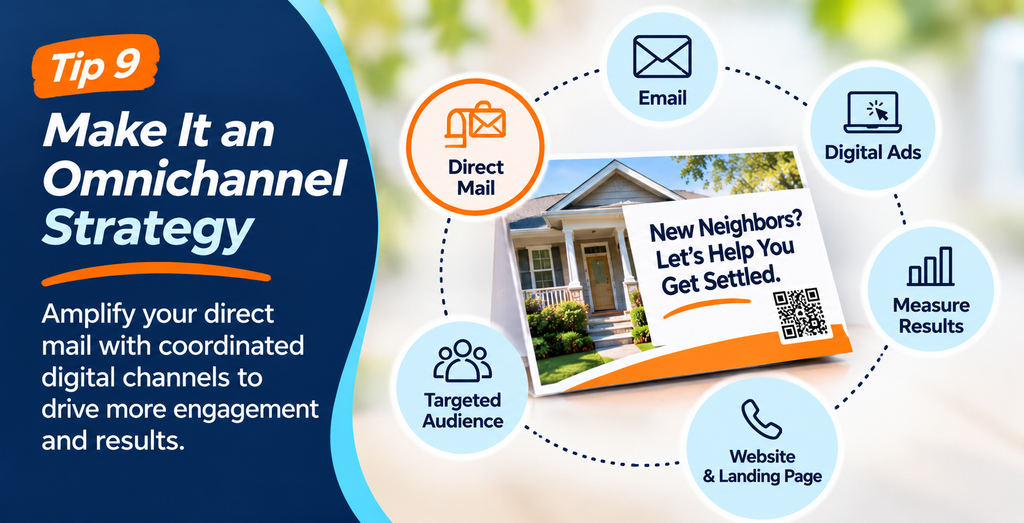
Direct mail shouldn’t operate separately from your other marketing channels.
When coordinated with digital marketing, it can reinforce brand awareness and encourage consumers to take the next step.
For example, a retailer could:
- Identify a targeted audience using consumer data.
- Send a personalized postcard featuring a relevant offer.
- Reinforce the message through email or digital advertising where permitted and appropriate.
- Direct consumers to a dedicated landing page.
- Measure engagement and purchases across channels.
Consistent messaging helps consumers recognize your brand as they move between offline and online experiences.
PGM’s consumer data and audience solutions can help marketers build targeted audiences for use across direct mail and other marketing channels.
Direct mail tip: Coordinate audience selection, timing, and messaging across channels to create a more consistent customer experience.
10. Measure Your Direct Mail Marketing Results
One of the biggest misconceptions about direct mail is that it’s difficult to measure.
Today, marketers have several ways to connect direct mail campaigns to responses and purchases.
Important metrics include:
Response rate: The percentage of recipients who respond to your campaign.
Conversion rate: The percentage of recipients who complete a desired action, such as making a purchase or scheduling an appointment.
Cost per acquisition: The total campaign cost divided by the number of customers acquired.
Return on investment (ROI): The financial return generated relative to the cost of the campaign.
Customer retention: Whether the campaign helps encourage repeat purchases or continued engagement.
QR codes, personalized URLs, unique offer codes, and matchback analysis can help marketers understand campaign performance.
Matchback analysis can be particularly useful when consumers receive a mail piece but later make a purchase through another channel.
However, marketers should distinguish attributed purchases from incremental sales. Holdout groups and controlled testing can provide stronger evidence of the campaign’s actual impact.
Direct mail tip: Establish your measurement strategy before launching the campaign, not after it ends.
How Can Consumer Data Improve Direct Mail Marketing Results?
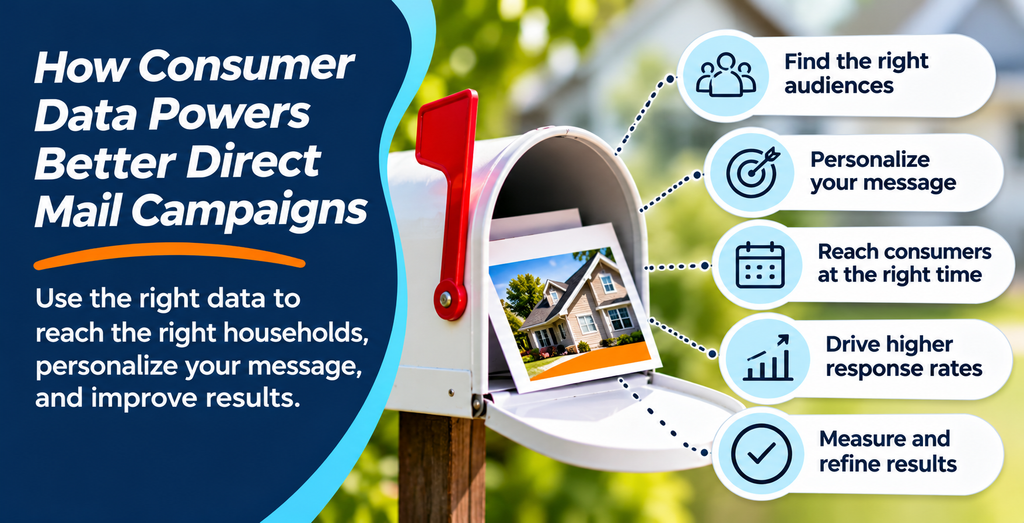
Consumer data helps marketers answer one of the most important questions in direct mail marketing:
Who is most likely to be interested in this offer?
Rather than mailing to every household in a geographic area, brands can use consumer data to identify more relevant audiences.
Depending on the campaign, this may include:
- Demographic data: Age ranges, income estimates, household composition, and other characteristics.
- Homeownership and property data: Information that helps identify relevant households for home-related products and services.
- Automotive data: Vehicle characteristics that can support automotive audience targeting.
- Mover data: Information about consumers preparing to move or who have recently moved.
- Consumer intent data: Research interests that may indicate potential demand for products or services.
- Customer data enrichment: Additional information that improves the usefulness of existing customer records.
For example, a home furnishings retailer might use mover data to identify households approaching a move, while a home services company could combine homeownership and property characteristics to create a more relevant mailing audience.
Better targeting doesn’t guarantee a response, but it helps marketers focus their budgets on consumers who are more likely to find the message useful.
Where Can Marketers Find Consumer Data for Direct Mail Campaigns?
Consumer data providers help B2C marketers build targeted mailing audiences, understand household characteristics, and identify consumers at relevant stages of the buying journey.
PGM is a U.S. consumer data and audience intelligence provider offering solutions that support direct mail and omnichannel marketing campaigns.
Its data offerings include:
People Factors: Consumer and Household Data
People Factors provides access to more than 250 million consumer profiles and over 700 available attributes.
Marketers can use this information to build audiences based on demographics, household characteristics, interests, and other targeting criteria.
Mover Factors: Pre-Mover and New Mover Audiences
Mover Factors helps brands identify consumers at different stages of the moving journey.
This can be particularly useful for home services, furniture, retail, insurance, and other categories where moving creates new purchasing needs.
Home Factors: Property Intelligence
Home Factors provides property-level intelligence, including characteristics and modeled risk information.
Relevant property characteristics can help home-related businesses better understand the households they want to reach.
Auto Factors: Automotive Audience Data
Auto Factors provides automotive and vehicle-related information to support audience targeting.
Automotive marketers can use relevant vehicle characteristics to help identify consumers for service, maintenance, and other automotive marketing campaigns.
Consumer Intent Data: Identify Research Interests
PGM’s Consumer Intent Data helps marketers identify audiences based on their research interests.
These insights can support campaigns designed to reach consumers who may be considering relevant products or services.
Data Append: Enrich Existing Customer Records
PGM’s Data Append solutions help businesses enrich customer records with additional contact, demographic, and household information.
For direct mail marketers, enriched data can support more relevant audience segmentation and personalization.
Together, these solutions help B2C marketers move beyond broad mailing lists and develop more targeted direct mail strategies.
Frequently Asked Questions About Direct Mail Marketing
Is direct mail still effective in 2027?
Direct mail remains a relevant marketing channel for brands looking to reach consumers through personalized, tangible communications. Lob’s 2026 research found that 87% of consumers read their mail the same day it arrives, while 79% have taken a digital action after receiving direct mail. These findings suggest continued opportunities for marketers planning 2027 campaigns.
What makes a direct mail campaign successful?
Successful direct mail campaigns combine accurate audience targeting, relevant offers, compelling creative, clear calls to action, and measurable results. Consumer data and personalization can help marketers make campaigns more relevant to recipients.
How do you target the right audience for direct mail?
Start by identifying the characteristics of your ideal customers. Consumer data can help marketers segment audiences based on demographics, homeownership, interests, vehicle characteristics, and life events such as moving. Providers like PGM offer audience data to support more targeted direct mail campaigns.
Where can I buy consumer mailing data for direct mail marketing?
Consumer data providers such as PGM offer consumer and household information that marketers can use to build targeted mailing audiences. PGM’s People Factors supports consumer segmentation, while Mover Factors helps marketers identify pre-movers and recent movers. Available data and permitted uses should be confirmed for each campaign.
What is the best type of consumer data for direct mail targeting?
The most useful data depends on your target audience and campaign goals. Retailers may benefit from demographic and consumer interest data, home services companies may use homeownership and property characteristics, and brands targeting consumers during major life changes may benefit from mover data.
How can I improve the quality of my direct mail list?
Review existing records for outdated addresses, duplicates, and missing information. Data Append services can enrich customer records with additional contact and household information, while address validation and list hygiene help reduce undeliverable mail.
How can I personalize direct mail campaigns?
Marketers can personalize direct mail using customer names, geographic information, household characteristics, relevant product offers, and life-event data. Variable data printing allows different recipients to receive customized content based on available information.
How can direct mail work with digital advertising?
Direct mail can complement email, social media, display advertising, and other digital channels. Marketers can coordinate audience targeting and messaging across channels, then use QR codes, landing pages, and campaign tracking to encourage and measure digital engagement.
How do you measure direct mail ROI?
Measure campaign costs alongside responses, conversions, customer acquisition, and revenue. QR codes, personalized URLs, unique offer codes, and matchback analysis can help connect purchases to mailing audiences. Controlled testing can provide additional insight into incremental results.
Which industries benefit from targeted direct mail?
Retail, home services, insurance, automotive, financial services, and other B2C industries can benefit from targeted direct mail. The effectiveness of each campaign depends on the audience, offer, timing, and execution.
The Future of Direct Mail Marketing
Direct mail continues to evolve as marketers find new ways to combine traditional outreach with consumer data and digital technology.
For 2027, the opportunity isn’t simply to send more mail. It’s to send more relevant mail.
Better audience targeting helps marketers focus on the right households. Personalization makes offers more meaningful. Digital integration gives consumers additional ways to respond, while campaign measurement helps brands refine their approach.
And as consumers become increasingly selective about the marketing messages they engage with, relevance and trust will remain important.
The brands that make direct mail feel timely, useful, and personal will be better positioned to earn attention and build stronger customer relationships.