
 Home Factors

According to the latest report from the National Association of Realtors, the typical first-time homebuyer in the U.S. is now 40 years old, the oldest on record.
For decades, buying your first home was often associated with your late 20s or early 30s. But today’s reality looks very different, and this shift is impacting how marketers need to reach new movers and homeowners alike.
What the Data Really Shows
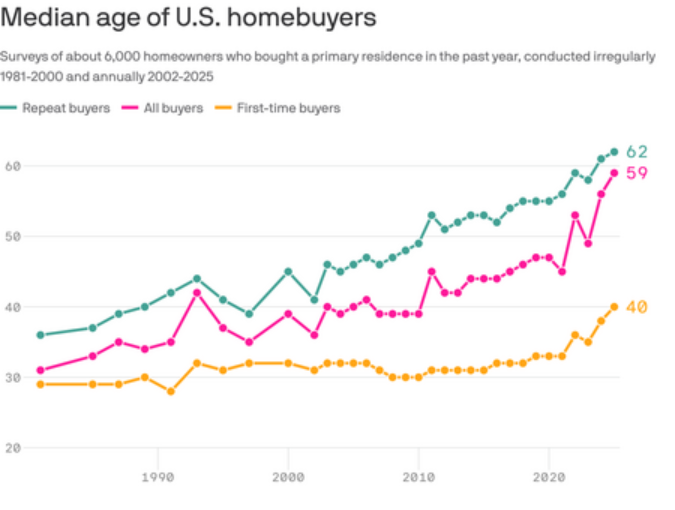
Take a look at this chart from NAR research:
(Source)
The upward trend is undeniable.
Since the 1980s, the median age for first-time buyers has steadily increased, but the past decade has accelerated that climb. Today:
- First-time buyers: 40 years old
- Repeat buyers: 62 years old
- Overall buyers: 59 years old
It’s about more than just a change in age; it’s about lifestyle, financial realities, and the way consumers are shifting their priorities.
Why the shift?
It’s a perfect storm:
- High home prices continue to push affordability out of reach for younger buyers.
- Mortgage rates hovering near 6% make monthly payments a bigger hurdle.
- Inventory shortages mean fewer starter homes and more competition.
But that’s not all, there are other factors that are amplifying the trend:
- Many first-time buyers are juggling significant student loan debt, making it harder to save for a down payment.
- Millennials and Gen Z value flexibility. They’re prioritizing travel and career mobility, which often delays homeownership.
- Younger buyers often start their careers in cities, where prices are highest. This forces them to rent longer.
- Inflation and job market fluctuations make committing to a mortgage feel riskier.
This results in many aspiring homeowners delaying their dream of owning a home. They’re renting longer, saving more slowly, and entering the market later in life.
The result? Millennials and Gen Z are waiting longer to buy, often well into their 30s or even 40s.

Creative Strategies Buyers Are Using
Faced with these challenges, first-time buyers are getting creative. Here’s what the data shows:
1. Co-Buying with Friends: Sharing the financial burden is becoming more common. Friends or even extended family members are pooling resources to purchase homes together.
2. Moving Farther Afield: Buyers are expanding their search radius, moving to more affordable areas — sometimes hours away from major cities.
3. Tapping Into Family Money: According to BMO research, 60% of Gen Z and 57% of millennials say they couldn’t have purchased a home without help from relatives. Gifts, loans, and inheritances are playing a bigger role than ever.
Today’s first-time buyer isn’t just older — they’re navigating a way more complex financial landscape, that requires flexibility and support. They’re coming up with more creative ways to reach the life goal of owning property.
What This Means for Real Estate Marketing
You need to rethink your strategy if you’re marketing to homebuyers, because this shift changes everything. Here’s how to adapt:
1. Rethink Your Buyer Personas
The “starter home” buyer is no longer a 28-year-old newlywed. Today’s first-time buyer could be:
- A 40-year-old professional with a decade of career experience.
- A single parent looking for stability.
- A co-buyer purchasing with a friend or sibling.
And your messaging should reflect the reality of today’s consumers- and their lifestyles.
You can highlight the features that are likely to resonate with an older buyer, such as home offices, multi-generational living spaces, and long-term investment potential.
2. Speak to Financial Concerns
We know affordability is top of mind, so you’ll want to create content that educates buyers on:
- Down payment assistance programs
- Shared ownership options
- Relocation strategies for affordability
3. Leverage Data for Precision Targeting
You should be using advanced audience data to reach the right buyers at the right time. For example you can:
- Identify households likely to receive family financial support
- Target consumers researching mortgage options or moving services
- Segment by life stage, not just age — because a 40-year-old first-time buyer has different needs than a 40-year-old repeat buyer
4. Humanize Your Messaging
A lot of emotions come with buying a home later in life. For today’s first-time buyers, there’s excitement, relief, and sometimes even frustration.
Your marketing should acknowledge their feelings and give them solutions; go beyond just sending listings. You need content that offers storytelling, testimonials that they can relate to, and empathy because the economic climate and housing market are out of their control.
Conclusion
The housing market is always changing; we’re used to that. But today’s buyers are very different from any others we have seen before.
“40 is the new 30” when it comes to homeownership. The first-time buyer of today is older, savvier, and looking for brands that understand them and their reality.
Are you ready to reach today’s homebuyer with relevance?