
 Home Factors

The U.S. auto market is shifting gears.
Legacy automakers have ruled the roads for many decades, shaping our consumer expectations with reliability, brand heritage, and incremental innovation.
But this reality is changing, and there’s a new generation of automotive brands. Vehicles born from tech-first mindsets are accelerating into the spotlight.
And they’re going well beyond just building cars; they’re redefining mobility with bold designs, electrification, connected ecosystems, and software-driven experiences.
Looks and performance still matter- but drivers are being asked to put their trust in brands they’ve never heard of, to embrace futuristic technologies, and to completely rethink what “owning a car” means.
But the question is, are drivers ready to make that leap?
Let’s explore the forces reshaping the U.S. auto market; what’s fueling this movement and what’s pumping the brakes.
The New Frontier of Auto: Awareness vs. Trust
Emerging Car Brand Awareness: Are New Automakers Gaining Traction?
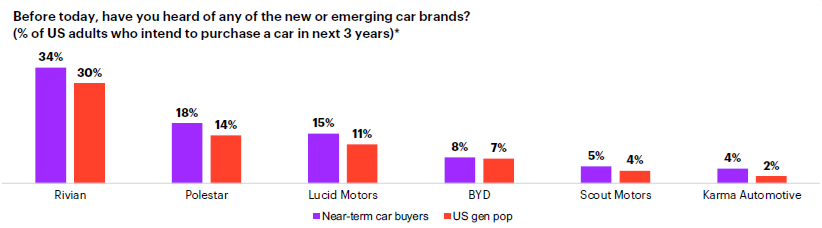
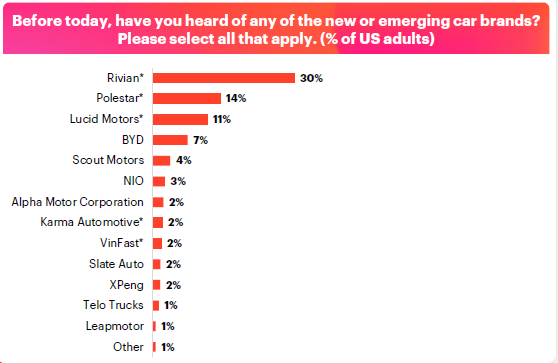
37% of Americans recognize at least one new car brand name.
(source)
That’s more than a third of the market, which is a clear sign that these brands aren’t just niche players anymore. Thanks to their bold marketing, social buzz, and the growing desire for electric innovation- they’re breaking through the noise and making themselves seen and known.
But we all know that awareness doesn’t equal trust. Knowing a name is one thing; believing in its reliability, safety, and long-term value is another.
Legacy automakers have decades of credibility behind them—generations of families driving their cars. These newer brands are asking consumers to take a leap of faith on unfamiliar technology, limited-service networks, and the promise of sustainability that sounds great but have yet to prove themselves.
(source)
Who is the “Next-Gen Car Buyer”?
This isn’t your average car shopper.
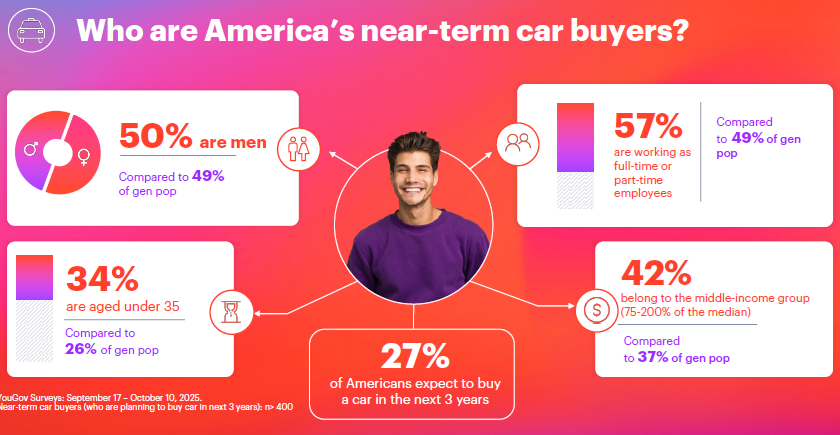
Interest really jumps among people planning to buy within the next 1–3 years. They’re younger, tech-savvy, and often boast a higher income.
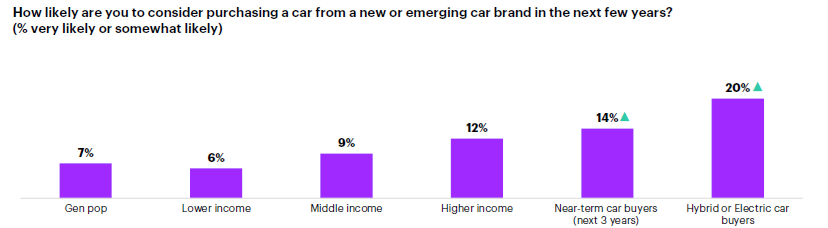
These consumers see cars as more than transportation; they want a vehicle that is an extension of their digital lifestyle.
We’re seeing regional trends, too: urban and coastal markets lead the way, while rural areas remain more cautious.
Key Players Leading the Charge
(source)
Three names dominate the conversation: Rivian, Polestar, and Lucid Motors.
- Rivian: Rugged, adventure-ready EVs built for the outdoors.
- Polestar: Scandinavian-inspired electric performance with sustainability at its core.
- Lucid Motors: Ultra-luxury EVs boasting cutting-edge range and design.
(source)
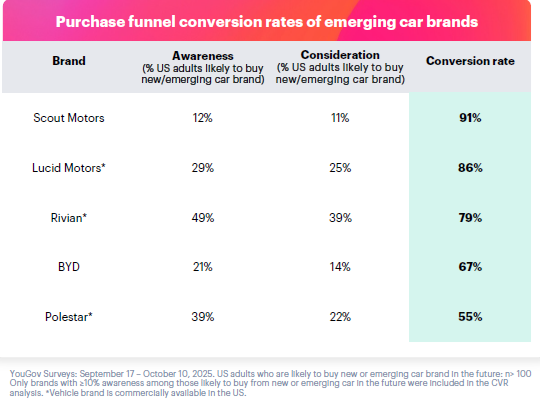
Rivian leads with 49% awareness, followed by Polestar (39%) and Lucid Motors (29%).
These brands are going beyond just selling cars, to sell a lifestyle.
What’s Driving the Appeal? (The Motivating Factors)
Let’s break down what attracts US consumers to next-gen car brands:
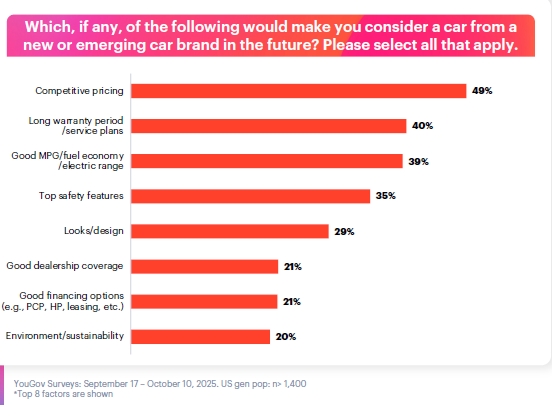
Cutting-Edge Technology and Innovation
These vehicles have advanced infotainment systems and vehicle-to-home energy integration; they deliver features that feel futuristic, like something out of the Jetsons.
Many offer a digital-first buying experience, skipping the dealership hassle entirely.
Design and Differentiation
Consumers want cars that make a statement. They want it to be sleek, with modern aesthetics. It’s a sign of status and shows they’re someone with environmental values.
The goal is to be completely different than the legacy designs of yesterday.
Mission-Driven Marketing (Sustainability)
Polestar’s climate-neutral goals and Rivian’s eco-conscious positioning help them resonate with buyers who want their purchase to align with their principles.
It feels different to supporting a brand born electric versus buying an EV from a legacy automaker.
(source)
What’s Pumping the Brakes? (The Roadblocks)
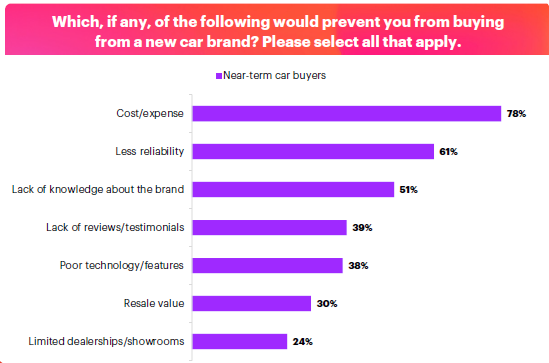
Why are consumers hesitant to buy from these emerging brands?
Three big hurdles we’ve noticed:
The Trust Gap (Reliability & Longevity)
New brands lack the decades-long track record of legacy automakers.
Concerns about build quality, warranty coverage, and long-term durability are a big deciding factor when you’re purchasing such a big-ticket item.
Service and Infrastructure Anxiety
Direct-to-consumer models raise some pretty big questions, like where to get it serviced? Not to mention, the charging network for EVs is patchy, and hesitation grows.
Affordability and Price Point
The early models from brands like Lucid and Rivian are carrying premium price tags, limiting mass-market adoption.
Many buyers will wait until more affordable options hit the road.
(source)
The Road Ahead for the US Auto Market
The U.S. auto industry is in transition.
There is a strong curiosity about next-gen brands, but there are also practical concerns—cost, trust, and infrastructure.
Expect the awareness to turn into action as service networks expand and expanding models (like Rivian’s R2) bring prices down.
But, there’s no doubt that the future of driving is being written today. What will it take for next-gen brands to truly earn their place in the fast lane?