 Home Factors



Social media advertising gives brands more ways than ever to reach potential customers. But with rising competition, changing algorithms and increasingly selective consumers, getting results takes more than putting an ad in front of a large audience.
Successful social media campaigns start with understanding who you’re trying to reach, choosing the right platforms and delivering relevant messages that encourage action.
Whether you’re advertising on Facebook, Instagram, LinkedIn, TikTok or other platforms, these 14 social media advertising do’s and don’ts can help you improve targeting, avoid common mistakes and get more from your advertising budget.
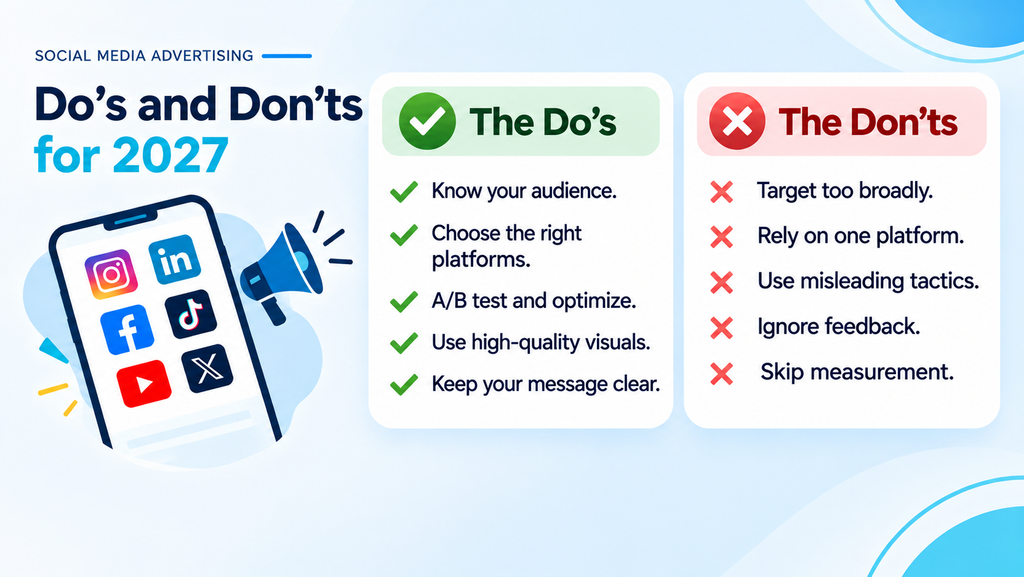
7 Do’s of Social Media Advertising
1. Do Identify Your Target Audience
Successful social media advertising starts with knowing who you want to reach. The more you understand your audience, the easier it becomes to create relevant messaging, select the right platforms and make better use of your advertising budget.
Start by looking beyond basic demographics. Consider your customers’ interests, purchasing behaviors, household characteristics and where they may be in the buying journey. First-party customer data, audience enrichment and consumer intent insights can help you develop a more complete picture of your ideal customers.
For example, a home improvement company may want to reach homeowners researching renovations, while an automotive brand may focus on consumers showing interest in purchasing a vehicle.
PGM’s People Factors and Online Signals data can help marketers better understand their audiences and identify consumers demonstrating relevant interests and behaviors.
The takeaway: Better audience insights can lead to more relevant advertising and less wasted spend.

2. Do Build Your Presence on the Right Platforms
Not every social media platform is right for every business. Rather than trying to advertise everywhere, focus on the platforms that align with your audience, campaign objectives and available resources.
LinkedIn may be a strong choice for reaching business professionals and decision-makers, while Facebook and Instagram offer opportunities to connect with a wide range of consumer audiences. TikTok and YouTube can be particularly useful for video-driven campaigns and product discovery.
Consider how people use each platform, the types of content they engage with and the advertising options available. A campaign designed to generate B2B leads may require a different approach than one promoting a consumer product.
It’s also important to evaluate performance regularly. A platform that generates engagement isn’t necessarily the one producing the most qualified leads or sales.
The takeaway: Invest in the platforms that reach your ideal customers and support your business goals.
3. Do Connect Social Media Advertising With Other Marketing Channels
Social media advertising can be effective on its own, but it often works best as part of a broader marketing strategy.
Consumers interact with brands across multiple channels before making a purchase. They may discover a product on Instagram, research it through search engines, visit a company’s website and respond to an email or direct mail offer later.
Connecting your social campaigns with other channels helps reinforce your messaging and create a more consistent customer experience.
For example, a retailer might use social advertising to introduce a seasonal promotion, email to follow up with existing customers and connected TV or display advertising to extend campaign reach.
Using consistent audience insights across channels can also help marketers coordinate their campaigns and reach relevant consumers at different stages of the buying journey.
The takeaway: Think beyond individual social campaigns and consider how they contribute to your overall marketing strategy.
4. Do A/B Test Your Social Media Ads
What works for one audience may not work for another. That’s why testing should be a regular part of your social media advertising strategy.
A/B testing allows you to compare different versions of an ad to determine which performs better. You might test headlines, images, video formats, calls to action or promotional offers.
Audience testing is equally important. For example, you could compare how different customer segments respond to the same creative or whether an interest-based audience performs differently from one informed by your customer data.
For more reliable results, change one major variable at a time and give your tests enough time and budget to produce meaningful data.
Don’t assume that the ad generating the most clicks is automatically the winner. Consider the quality of those clicks and whether they lead to conversions.
The takeaway: Let performance data guide your creative and targeting decisions.
5. Do Use High-Quality Images and Videos
Social media is a highly visual environment, and your creative needs to capture attention quickly.
High-quality images, engaging videos and clear messaging can help your ads stand out. But quality doesn’t always mean expensive production. Authentic product demonstrations, customer testimonials, behind-the-scenes content and short educational videos can be effective ways to connect with audiences.
Short-form video is especially useful for explaining products, demonstrating benefits and introducing your brand to new customers.
Make sure your creative is designed for the platform where it will appear. Consider mobile viewing, aspect ratios, captions and how quickly your message becomes clear.
It’s also worth testing different creative approaches. A polished promotional video may work well for one audience, while a simple product demonstration performs better for another.
The takeaway: Create content that is relevant, easy to understand and designed for the way people use each platform.
6. Do Test, Analyze and Improve Your Social Media Advertising Campaigns
Launching an advertising campaign is only the beginning. Ongoing measurement and optimization are essential for understanding what’s working and where improvements are needed.
Start by establishing clear goals. Are you trying to generate leads, drive website traffic, increase purchases or build brand awareness?
Then focus on metrics that support those objectives. Click-through rates and engagement can provide useful insights, but conversions, cost per qualified lead, customer acquisition costs and revenue often tell a more complete story.
Review campaign performance by audience, platform, creative and placement. Look for patterns that can help you refine your strategy.
For example, one audience may generate fewer clicks but convert at a higher rate. Another may respond well to video but not static images.
Use these findings to adjust your targeting, creative, messaging and budget allocation.
The takeaway: Measure what matters to your business, not just what looks good in an advertising report.
7. Do Use Clear and Concise Messaging
Social media users scroll through large amounts of content every day. Your ads need to communicate their value quickly.
Focus on one primary message and make it easy for your audience to understand what you’re offering and why it matters.
Lead with a clear benefit, address a relevant customer need and include a specific call to action.
For example, rather than simply promoting a product’s features, explain how it solves a problem or makes something easier for the customer.
Avoid overly complicated language, excessive text and competing messages that distract from your main offer.
Your call to action should also match the next step you want people to take, whether that’s downloading a report, requesting information, shopping a product or scheduling a demonstration.
The takeaway: Make your message easy to understand and your next step easy to take.
7 Don’ts of Social Media Advertising
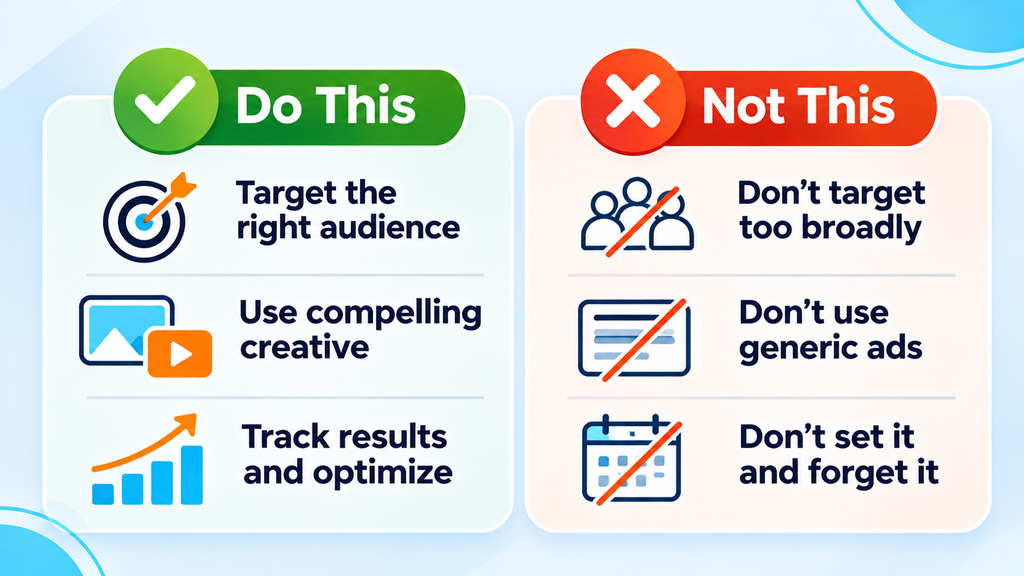
1. Don’t Target Too Broad of an Audience
Reaching more people doesn’t necessarily mean reaching more potential customers.
Broad targeting can expose your ads to consumers who have little interest in your products or services, potentially resulting in wasted impressions and lower-quality traffic.
Start by identifying the characteristics of your ideal customers, including their needs, interests and relevant behaviors.
Audience data can help you refine your strategy by providing additional insights into who your customers are and what they may be interested in purchasing.
However, avoid making your targeting so restrictive that platforms have too little room to optimize delivery. The right balance depends on your campaign goals, available data and advertising platform.
The takeaway: Focus on audience relevance while giving your campaigns enough scale to perform.
2. Don’t Rely on One Social Media Platform
It’s tempting to concentrate your advertising budget on the platform that has historically performed best. But relying entirely on one channel can limit your reach and leave your campaigns vulnerable to changing costs, algorithms and audience behaviors.
Different platforms serve different purposes in the customer journey.
A consumer might discover a brand on TikTok, research it on YouTube and later respond to an Instagram advertisement.
Consider testing additional platforms when they align with your audience and objectives. You don’t need to advertise everywhere, but you should understand where your customers are spending time and how different channels contribute to conversions.
Evaluate each platform based on business results rather than popularity alone.
The takeaway: Diversify thoughtfully and invest in channels that contribute to your marketing goals.
3. Don’t Use Spammy or Misleading Advertising Tactics
Attention-grabbing headlines can help your ads stand out, but misleading claims, exaggerated promises and aggressive promotional tactics can quickly damage trust.
Avoid clickbait that doesn’t deliver on its promise, repetitive advertisements that overwhelm your audience and messaging that feels irrelevant to the people you’re targeting.
As AI-generated advertising content becomes more common, it’s also important to review creative for accuracy, authenticity and compliance with platform policies.
Your advertising should clearly communicate what you’re offering and what consumers can expect when they click.
Relevant, transparent messaging is more likely to support lasting customer relationships than tactics designed simply to generate immediate attention.
The takeaway: Build trust with useful, accurate and relevant advertising.
4. Don’t Ignore Negative Comments and Feedback
Social media advertising creates opportunities for two-way communication, and not every interaction will be positive.
Negative comments, customer questions and complaints can provide valuable insights into how people perceive your brand, products and advertising.
Monitor comments and messages regularly, and respond to legitimate concerns in a timely, professional manner.
Look for recurring questions or objections that may indicate opportunities to improve your messaging, landing pages or customer experience.
For example, if people repeatedly ask about pricing or product availability, your ad may need to communicate that information more clearly.
Not every negative comment requires an extended conversation, but ignoring customer feedback altogether can create unnecessary frustration.
The takeaway: Treat audience feedback as an opportunity to improve both your advertising and customer experience.
5. Don’t Neglect Your Organic Social Media Strategy
Paid advertising can help you reach targeted audiences, but organic social media still plays an important role in building brand awareness, credibility and engagement.
When someone sees your ad, they may visit your company profile before taking action. An active, informative social presence can help reinforce your brand’s credibility.
Use organic content to share industry insights, answer common questions, highlight customer successes and demonstrate your expertise.
Organic performance can also inform your paid advertising strategy. Posts that generate meaningful engagement may reveal topics, messaging or creative approaches worth testing in sponsored campaigns.
Paid and organic social media don’t need to operate as separate efforts.
The takeaway: Use organic content to strengthen your brand presence and support your paid campaigns.
6. Don’t Forget to Set a Budget and Measure ROI
Social media advertising can quickly become expensive without clear budgets, campaign objectives and performance measurement.
Before launching a campaign, determine what you’re willing to spend and what results would make that investment worthwhile.
Establish benchmarks for metrics such as cost per lead, customer acquisition cost, conversion rate or return on ad spend, depending on your goals.
Monitor performance throughout the campaign rather than waiting until the budget is exhausted.
Keep in mind that a low cost per click doesn’t necessarily translate into a profitable campaign. A smaller number of qualified leads may be more valuable than a large volume of visitors who never convert.
Use conversion tracking and available attribution tools to better understand how your campaigns contribute to business outcomes.
The takeaway: Connect advertising spend to measurable results and adjust your investment based on performance.
7. Don’t Rely Solely on Social Media Advertising to Reach Your Marketing Goals
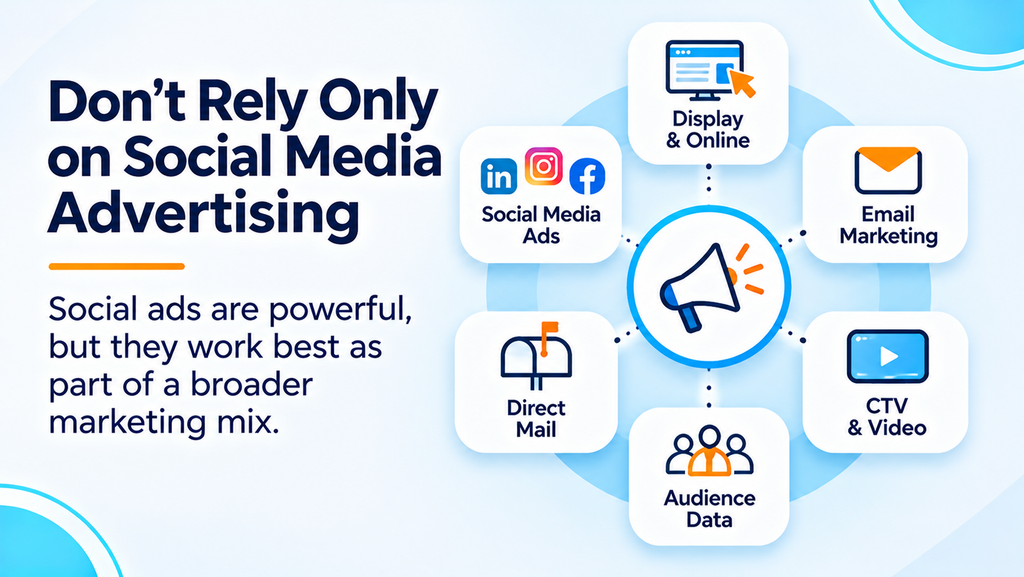
Social media advertising is an important part of many marketing strategies, but it shouldn’t be the only way you reach potential customers.
Consumers research products, compare options and make purchasing decisions across multiple channels.
Email, search, connected TV, direct mail, display advertising and other channels can help you reach consumers at different points in their buying journey.
An integrated approach also creates opportunities to reinforce your messaging and reach people who may not respond to a social advertisement alone.
Audience intelligence can help inform these efforts by giving marketers a more consistent understanding of the consumers they want to reach.
Rather than treating each channel as an isolated campaign, consider how they work together to support awareness, engagement and conversions.
The takeaway: Build a coordinated marketing strategy that reaches your customers across the channels they use.
How Can Better Audience Data Improve Social Media Advertising?
Even the most compelling social media ad won’t deliver results if it isn’t reaching the right audience.
While social media platforms offer a variety of targeting options, marketers can benefit from a deeper understanding of their customers, including household characteristics, interests, shopping behaviors and purchase intent.
For example, a home improvement brand may want to connect with homeowners researching renovation projects. An automotive marketer might focus on consumers showing interest in purchasing a new vehicle. And a retailer could use shopping intent insights to better understand which product categories are attracting consumer attention.
This is where audience intelligence can help.
PGM’s People Factors provides demographic, household and lifestyle insights to help marketers better understand their customers and build more relevant audiences.
PGM Online Signals identifies observed consumer research and shopping interests, helping marketers recognize potential buying intent across a wide range of categories.
Together, these insights can help marketers:
- Build more relevant audience segments based on consumer characteristics and interests.
- Better understand existing customers and identify potential new audiences.
- Develop messaging that aligns with consumer needs and buying interests.
- Inform audience activation strategies across supported advertising channels.
- Reduce reliance on assumptions when planning advertising campaigns.
The goal isn’t simply to reach more people. It’s to better understand who you’re reaching and why they may be interested in what you’re offering.
Frequently Asked Questions About Social Media Advertising
What are the most important do’s and don’ts of social media advertising?
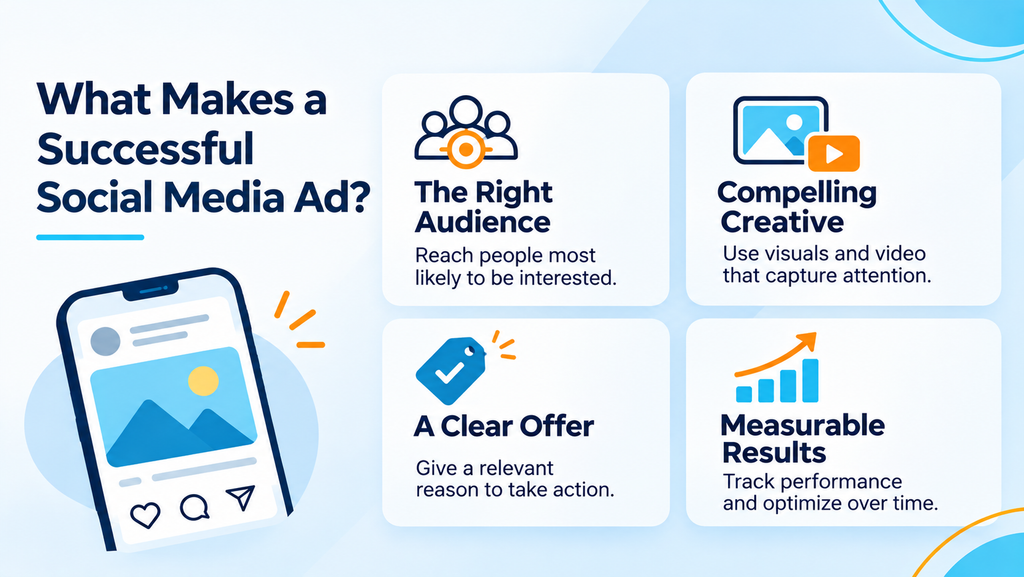
The most important social media advertising best practices include identifying your target audience, selecting the right platforms, testing ad creative, using clear messaging and measuring campaign performance. Common mistakes include overly broad targeting, misleading advertisements, ignoring audience feedback and failing to establish measurable campaign goals.
What makes a successful social media advertising campaign?
A successful campaign combines a clearly defined audience, relevant messaging, compelling creative and a measurable objective. Marketers should evaluate results based on their business goals, whether that’s generating qualified leads, increasing purchases, improving customer acquisition costs or building brand awareness.
How can I improve social media advertising targeting?
Start by analyzing your existing customers and identifying the characteristics of your ideal audience. Demographic, household, lifestyle and consumer intent data can provide additional insights to inform audience selection and messaging. Use these insights within the targeting capabilities and policies of each advertising platform.
Which social media platforms are best for advertising?
The best platform depends on your target audience and campaign objectives. LinkedIn is commonly used for B2B marketing, while Facebook, Instagram, TikTok and YouTube offer different opportunities for consumer engagement, product discovery and advertising. Testing and performance measurement can help determine which platforms deliver the best results for your business.
How often should I update my social media ads?
Review campaign performance regularly and refresh creative when engagement declines, conversion costs increase or audiences show signs of ad fatigue. The ideal frequency depends on your campaign budget, audience size, advertising platform and performance trends.
How is AI changing social media advertising?
AI is increasingly used to support automated bidding, creative development, audience optimization and campaign analysis. These tools can help marketers improve efficiency, but human oversight remains important for ensuring accurate messaging, brand consistency and meaningful performance measurement.
Why is audience data important for social media advertising?
Audience data helps marketers better understand consumer characteristics, interests and behaviors. These insights can support more relevant messaging, better-informed audience planning and stronger advertising strategies across channels.