
 Home Factors



Email appending is one of the fastest and most accurate ways to add emails to your customer lists. Although it has been around almost as long as email marketing itself, many brands are not using it often enough or even at all.
What Is Email Append and How Does It Work?
Email append is the process of matching existing customer records with missing email addresses using identifying information such as name and postal address.
For example, a retailer may have thousands of customer records containing names, mailing addresses and purchase histories, but no email addresses. Through email append, the retailer can identify potential email matches and expand its ability to communicate with those customers.
The process typically involves:
- Submitting your customer records. Provide available identifying information, such as customer names and postal addresses.
- Matching against an email database. A data provider compares your records against available email information to identify potential matches.
- Evaluating match quality and permissions. Matches are reviewed based on the provider’s matching standards, deliverability requirements and applicable permission criteria.
- Returning the appended data. Qualifying email addresses are added to the corresponding customer records, often with match indicators.
PGM offers individual- and household-level matching to help brands identify missing email addresses and make better use of their existing customer data.
How Healthy Is Your Customer Data? Missing email addresses may be just one of the issues affecting your marketing performance. Get our Data Health Checklist to identify common data problems and opportunities to improve your targeting.
Email Append vs. Email Verification vs. Data Hygiene: What’s the Difference?
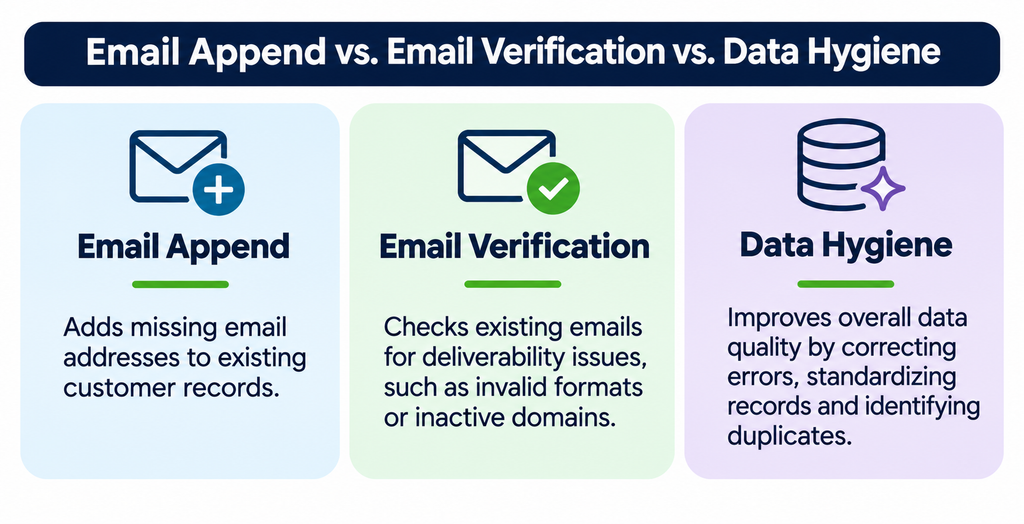
Email append, email verification and data hygiene all help marketers improve their customer databases, but they serve different purposes. Understanding the differences can help you determine which services your business needs.
Email Append: Fill in Missing Email Addresses
Email append is the process of matching existing customer records with missing email addresses using identifying information such as name and postal address. It helps businesses expand their potential email marketing reach and get more value from their existing customer data.
Email Verification: Check Your Existing Email Addresses
Email verification evaluates the email addresses already in your database to identify potential deliverability issues, such as invalid formats, nonexistent domains or addresses that may no longer be active. Regular verification can help reduce unnecessary sends and protect your sender reputation.
Data Hygiene: Improve Overall Database Quality
Data hygiene goes beyond email addresses to improve the accuracy and consistency of your customer records. This includes correcting errors, standardizing information, identifying duplicates and addressing outdated data.
Why You Need All Three
A healthy customer database requires more than simply adding new email addresses. Email append helps fill gaps, email verification evaluates existing contact information and data hygiene helps keep your overall database accurate and usable.
Together, these services can help marketers expand their potential reach, improve targeting and get more value from their first-party customer data.
How Does the Email Append Process Work?
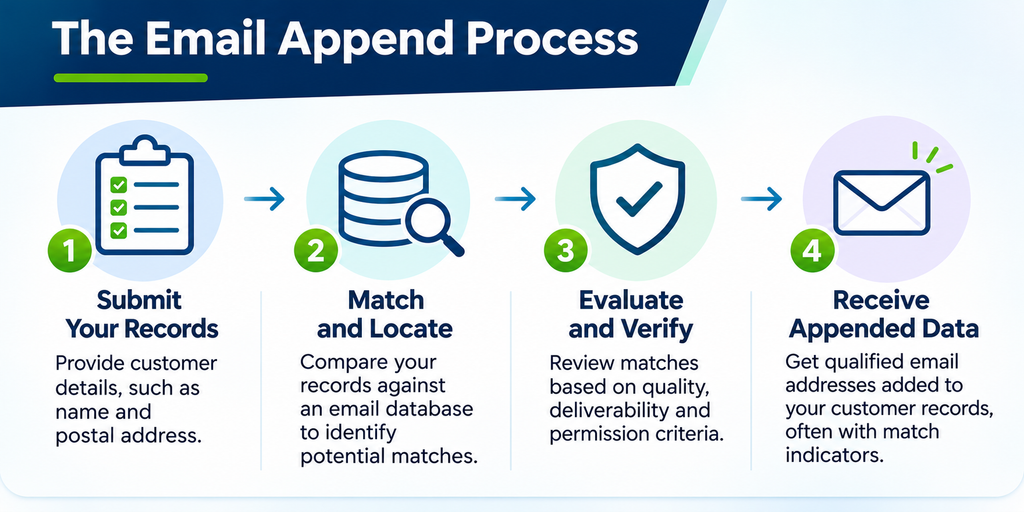
Email append helps businesses identify missing email addresses within their existing customer databases. By matching customer information against an email database, marketers can expand their potential reach without having to collect every email address from scratch.
Here’s how the process typically works:
1. Submit Your Customer Records
Start with your existing customer database. Information such as first name, last name and postal address can be used to identify potential email matches. The more complete and accurate your records, the better your chances of finding reliable matches.
2. Match Records Against an Email Database
PGM compares your customer information against its email data to locate potential matches. Matching can occur at the individual level, using first name, last name and address, or at the household level, using last name and address.
3. Evaluate Match Quality and Permissions
Potential matches are evaluated based on matching criteria, deliverability and permission requirements. PGM’s process includes a permission message, with only qualifying, deliverable and non-opted-out addresses returned for append.
4. Receive Your Appended Email Data
Qualifying email addresses are added to the corresponding customer records, along with match-level indicators. This gives marketers additional contact information to support future campaigns, subject to applicable marketing requirements.
Turn More Customer Records Into Marketing Opportunities
Email append can help brands reconnect with existing customers, support retention campaigns and make better use of their first-party data.
The key is working with quality data and following best practices for permission, deliverability and ongoing database maintenance.
What Are the Benefits of Email Append for Marketers?
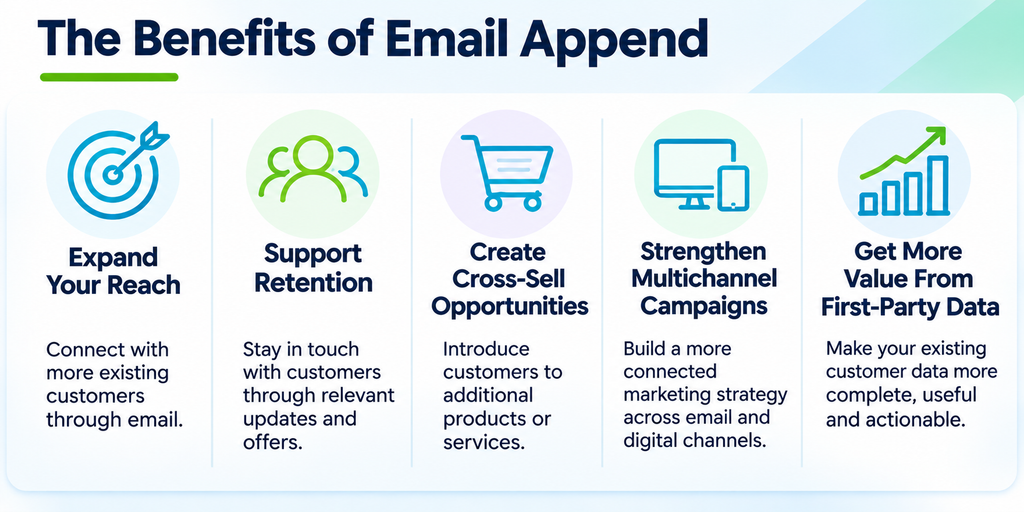
Email append can help brands get more value from their existing customer databases. Rather than relying solely on acquiring new contacts, marketers can identify opportunities to reach customers they already know.
Expand Your Email Marketing Reach
If a significant portion of your customer database is missing email addresses, you’re potentially missing opportunities to communicate with those customers. Email append can help fill those gaps.
Support Customer Retention
Reach more existing customers with relevant updates, loyalty communications and personalized offers.
Create More Cross-Sell Opportunities
Use qualifying appended email addresses to introduce customers to additional products or services based on their needs and purchase histories.
Strengthen Multichannel Campaigns
Email append can support a more connected marketing strategy by making additional customer records available for eligible email and digital activation programs.
Get More Value From First-Party Data
Your existing customer database is a valuable marketing asset. By improving its completeness and combining it with additional audience insights, you can develop more targeted campaigns.
Email Append Best Practices: 6 Tips for Better Results
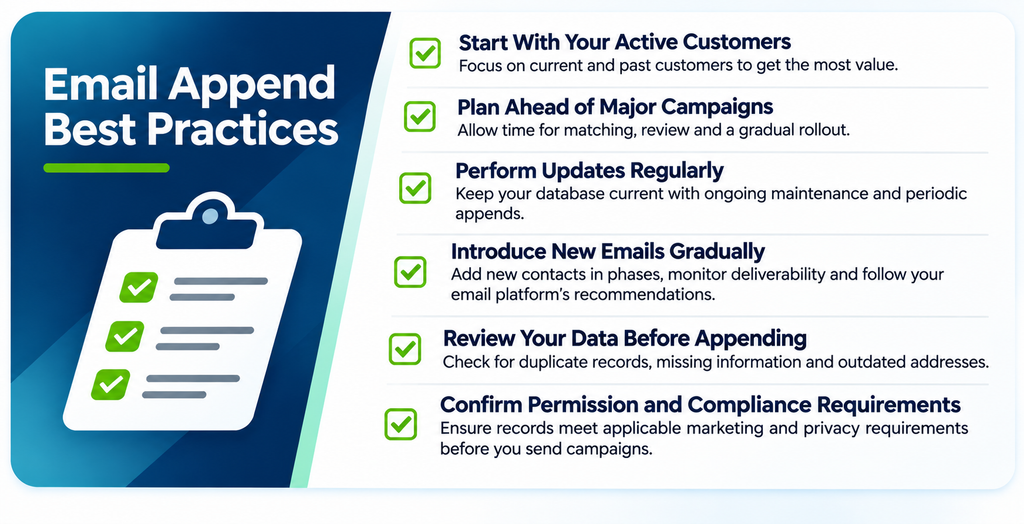
Email append can help expand your marketing reach, but getting quality results requires more than simply adding email addresses to your database. Following these email append best practices can help you improve match quality, protect deliverability and get more value from your customer data.
1. Start With Your Active Customers
Begin with existing customers who don’t have an email address on file. More recent customer records are often more accurate, making them a good starting point for email append. Once you’ve addressed your active customer base, consider expanding to older records.
2. Plan Ahead of Major Marketing Campaigns
Don’t wait until the last minute to update your database. Schedule email append projects ahead of seasonal promotions, product launches or other major campaigns. This gives you time to complete the matching process, review results and gradually introduce new contacts.
3. Update Your Customer Data Regularly
Customer information changes over time. Make email append part of your ongoing data maintenance strategy rather than a one-time project. Depending on your business needs, consider monthly, quarterly or biannual updates.
4. Introduce Newly Appended Emails Gradually
Adding a large number of new email addresses to your campaigns at once can create deliverability challenges. Take a phased approach, monitor bounce rates and engagement, and follow your email service provider’s recommendations to help protect your sender reputation.
5. Review Your Data Before Appending
The quality of your original customer records can affect match results. Before submitting your file, review it for duplicate records, incomplete names, outdated postal addresses and other inconsistencies. Cleaner input data can help improve the accuracy of your matches.
6. Confirm Permission and Compliance Requirements
Before sending marketing emails to newly appended contacts, make sure the addresses meet applicable privacy and marketing requirements, as well as your email platform’s policies. A successful email match doesn’t automatically establish permission to send marketing messages.
Make Email Append Part of Your Data Strategy
Email append works best when combined with regular data hygiene, email verification and thoughtful campaign planning. By maintaining accurate customer records and following these best practices, marketers can expand their potential reach while protecting the quality of their email programs.
How Do You Measure Email Append Success?
A successful email append project isn’t just about how many addresses are added. It’s about the quality of those matches and how effectively they support your marketing goals.
Here are a few important metrics to track:
- Match Rate: The percentage of submitted records successfully matched to an email address.
- Deliverability Rate: The percentage of messages accepted by recipients’ mail servers.
- Audience Reach: The number of additional customers potentially reachable through email.
- Engagement: Clicks and other meaningful interactions with your email campaigns.
- Conversions: Purchases, inquiries or other actions generated by your outreach.
- ROI: The incremental value generated compared with your append and campaign costs.
Monitoring these metrics can help you evaluate your email append investment and identify opportunities to improve future campaigns.
Frequently Asked Questions About Email Append
Is email appending legal?
Email appending is not inherently illegal, but how appended addresses are collected, matched and used matters. Businesses must comply with applicable privacy and marketing laws, including CAN-SPAM where relevant, as well as their email service provider’s policies.
How accurate is email append?
Accuracy depends on the quality of the original customer records, the data provider’s matching methods and the reference data being used. Marketers should ask providers about match standards, deliverability checks and quality controls.
How often should you append email addresses?
The ideal frequency depends on how quickly your customer database changes. Many organizations benefit from regular maintenance and periodic append projects rather than treating email append as a one-time activity.
Can you append emails to an existing customer database?
Yes. Email append is commonly used to identify missing email addresses within existing customer records, provided the matching and intended use meet applicable requirements.